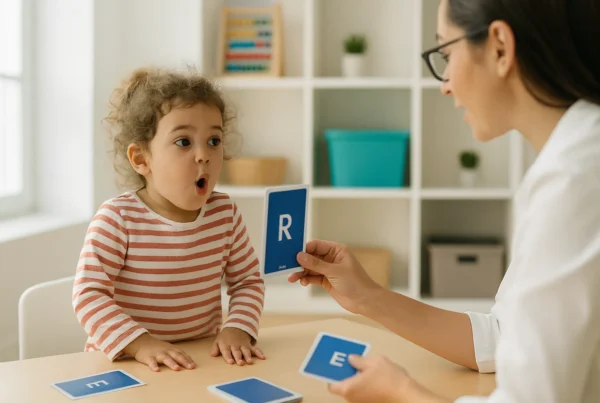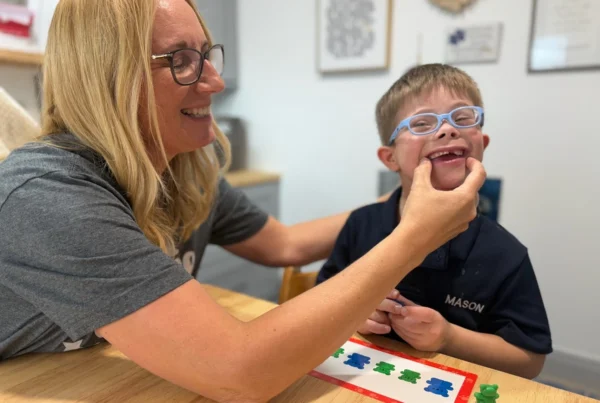

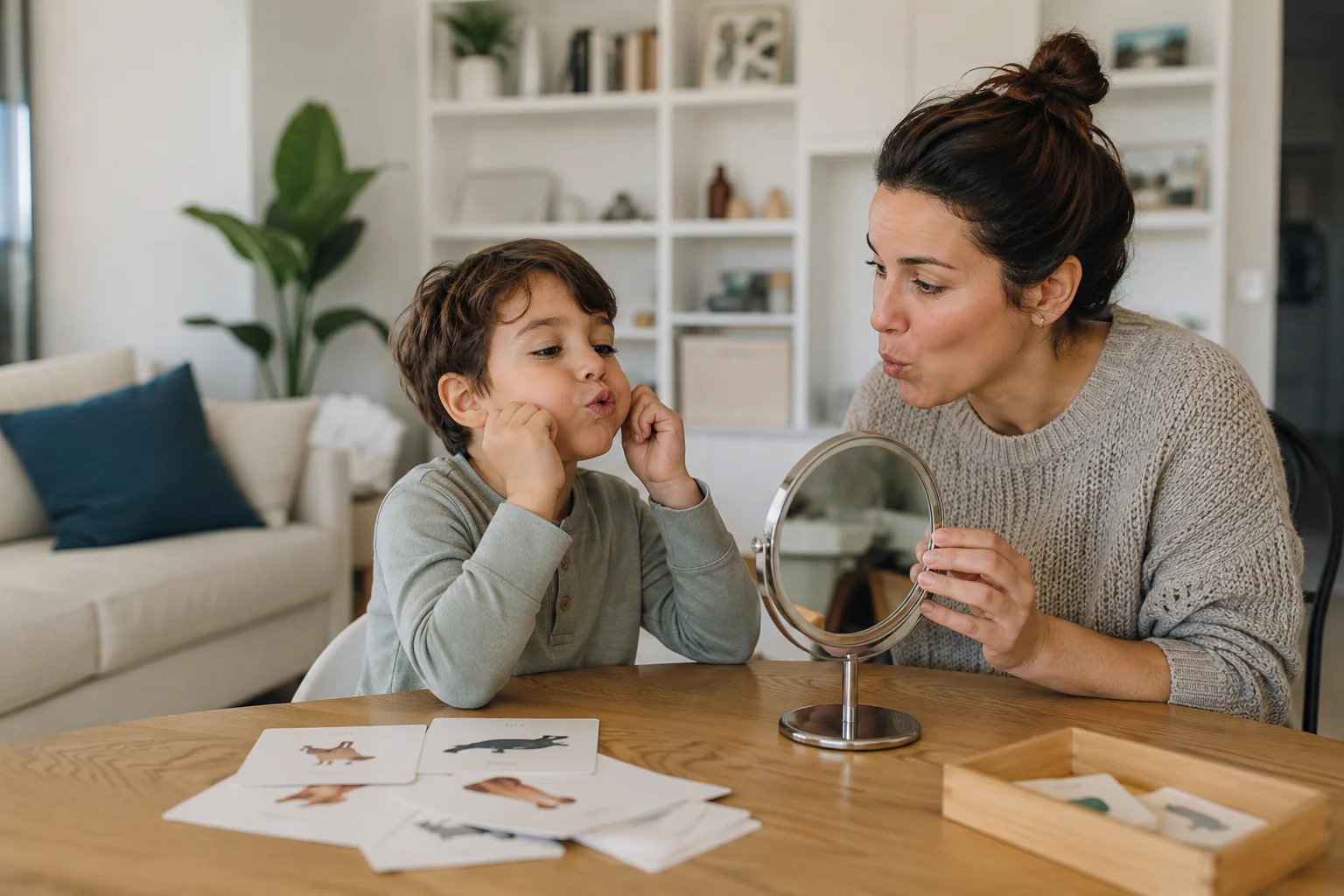

Speech therapy exercises for kids make the biggest difference when families practice daily at home, not just in the clinic. Jill Dews, MA, CCC-SLP founded Let’s Talk Speech and Language Therapy in Mission Viejo in 2002. She has helped families in Palmia, Casta del Sol, and Canyon Crest build home routines that get real results through early intervention for speech therapy. This guide covers five clinician-recommended exercises parents can use between sessions to support their child’s progress.
Consistent home practice is one of the strongest predictors of progress in pediatric speech therapy. Children who see their therapist once a week have limited clinic time to build new skills. Families who advance the fastest carry what happens in the session into everyday routines at home. Exploring what Mission Viejo families need to know about speech therapy starts with understanding how much parents can do between sessions. Daily practice during the toddler years gives the developing brain the repetition it needs to build lasting skills.
Why Home Practice Matters in Pediatric Speech Therapy
Clinic sessions work like a piano lesson. The therapist provides instruction, correction, and direction for what to work on next. Home practice builds the automaticity that makes new skills permanent. Without it, children spend clinic time relearning what faded during the week rather than advancing to new goals.
Home practice grounds therapy in the real contexts where communication matters most. A child who practices target sounds at dinner or during play builds skills that show up in everyday life. Those skills do not stay locked in the therapy room. Jill Dews designs every home program around each child’s current goals, developmental level, and family schedule.
Five Speech Therapy Exercises Parents Can Use at Home
The exercises below target communication goals Jill Dews commonly works on with Let’s Talk families. Before starting, confirm with your child’s therapist that each exercise fits their current targets and skill level. Not every exercise will be right for every child at every stage of therapy.
- Mirror sound play
- Expansion sentences
- I Spy for speech sounds
- Pause and wait book reading
- Turn-taking games
Each of these exercises is designed to fit inside a part of your day you are already doing. Your child’s therapist at Let’s Talk will walk you through exactly how to use each one based on your child’s current goals.
How to Get the Most Out of Home Practice
The most sustainable routines fit inside what your family already does each day. Families that try to carve out a separate practice block often find it gets skipped when life gets busy. Jill coaches parents at Let’s Talk to embed practice into existing routines so therapy becomes a natural part of daily life.
| Practice Setting | Best Exercise | Why It Works |
| Mealtime | Expansion sentences | Natural conversation with repeated opportunities |
| Car ride | I Spy for speech sounds | Captive attention, low distraction, high repetition |
| Bedtime | Pause and wait book reading | Calm setting, familiar language, predictable structure |
| Playtime | Turn-taking games | Natural motivation and real communication need |
| Bathtime | Mirror sound play | Relaxed setting, face visible, child receptive |
Practice inside existing routines is far easier to maintain than practice that competes with everything else on the schedule. The Let’s Talk families who progress fastest between sessions are the ones who found five minutes inside something they already do each day.
What to Do When Home Practice Feels Difficult
Some children resist home practice when they associate it with working on something hard. This reaction is common and does not mean home practice is impossible. It usually signals that exercises need to be simpler or more embedded in play rather than presented as a structured activity.
Parents at Let’s Talk often find the exercises that produced the best results seemed too easy at first. Simple is frequently exactly right. The goal is high repetition in a low-pressure setting, not complexity. If resistance continues, bring that information to your next session and Jill will adjust the home program accordingly.
When to Ask for a Speech Therapy Evaluation
If your child is not yet in therapy and you have concerns about their development, the most important next step is a professional evaluation. Home exercises are designed for children already receiving therapy. They are not a substitute for clinical assessment and diagnosis from a licensed speech-language pathologist.
Parents in Mission Viejo, Aliso Viejo, and Lake Forest contact Let’s Talk when they are unsure whether their child’s development is on track. If you have questions about insurance and payment options for speech therapy, the team walks every family through coverage before the first appointment. Early evaluation is almost always better than waiting to see if concerns resolve on their own.
Supporting Your Child’s Voice at Let’s Talk
Parents in Mission Viejo and across South Orange County deserve a speech therapist who listens, explains clearly, and builds a plan that fits their real family life. Jill Dews, MA, CCC-SLP has done exactly that since 2002. She works with families from every neighborhood in the Saddleback Valley to help children build the communication skills they need at home, at school, and in every conversation that matters.
Call Let’s Talk at (949) 218-0508 to schedule an evaluation for your child today. Jill Dews, MA, CCC-SLP and her team at letstalkspeechandlanguagetherapy.com will walk you through the full evaluation process and answer every question you have. Take the next step now and give your child the support they deserve.
Frequently Asked Questions
How often should parents practice speech therapy exercises at home?
Most speech-language pathologists recommend five to ten minutes of daily practice rather than longer, less frequent sessions. Consistent daily input is more effective because the developing brain builds skills through repeated exposure over time. Jill Dews provides every Let’s Talk family with a specific recommendation based on each child’s age, goals, and therapy schedule. According to the American Speech-Language-Hearing Association, caregiver involvement in speech therapy significantly improves outcomes for children.
At what age should a child start speech therapy exercises at home?
Home exercises can be appropriate for children as young as 12 to 18 months using play-based techniques like expansion and pause and wait. The level of structure should always match the child’s developmental stage and current therapy goals. For very young children, effective home practice is indistinguishable from play. The CDC’s developmental milestones resource provides a reliable reference for what to expect at each age during early childhood.
Can home exercises replace speech therapy sessions?
Home exercises supplement clinic-based therapy but do not replace professional sessions with a licensed speech-language pathologist. Jill Dews provides accurate diagnosis, a targeted treatment plan, and real-time clinical adjustments at every Let’s Talk session. Home practice extends and reinforces that work between visits. It cannot replicate the assessment and clinical decision-making that drives an effective program. The American Academy of Pediatrics consistently supports early professional intervention for children with speech and language concerns.
What should parents do if their child refuses speech therapy exercises at home?
Resistance usually signals the practice is too difficult, too structured, or disconnected from what motivates the child. Simplify the exercises, embed them more deeply in play, and shorten each session until confidence builds. If resistance continues, bring that information to the next session rather than forcing practice the child finds unpleasant. Jill Dews adjusts home programs based on parent feedback at every visit. The National Institute on Deafness and Other Communication Disorders confirms that family engagement is one of the strongest predictors of positive outcomes in pediatric speech therapy.