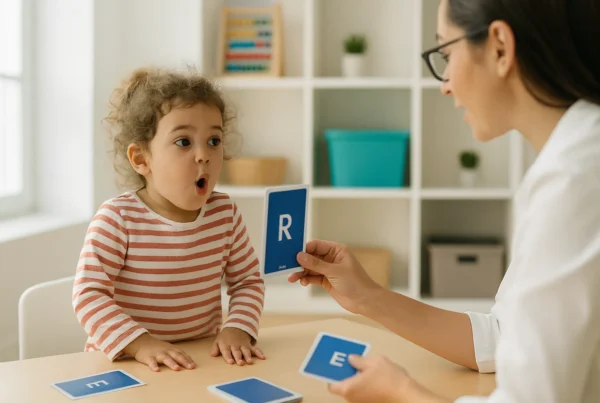



When families seek early intervention for their child, they often meet a team of professionals working together toward one shared goal: helping that child grow and communicate with confidence. Collaboration between early intervention specialists, speech-language pathologists, and other therapists ensures each child receives care that addresses their full developmental picture.
Jill Dews, M.A., CCC-SLP, founder of Let’s Talk Speech and Language Therapy in Mission Viejo, California, emphasizes teamwork in every part of her practice. With over two decades of experience and advanced training in communicative disorders, Jill knows that children make the most progress when families, specialists, and therapists work as one unified team.
The Power of a Team Approach
Early intervention works best when multiple experts share their knowledge to create a holistic treatment plan. Each specialist brings a unique perspective, identifying ways to strengthen language, motor skills, and social interaction simultaneously. Collaboration ensures that no part of a child’s development is overlooked.
Families in neighborhoods like Arroyo Vista, Pacific Hills, and Evergreen Ridge often describe the difference teamwork makes. With consistent communication between specialists, progress feels smoother and easier to sustain at home.
How Collaboration Improves Outcomes
When early intervention specialists and therapists coordinate care, they can align goals and strategies across all areas of development. This means speech goals complement physical milestones, and cognitive tasks support emotional growth. Shared documentation and regular meetings ensure that progress in one area reinforces success in another.
Working together also helps prevent mixed signals or conflicting recommendations. For example, a speech-language pathologist might adjust exercises based on input from an occupational therapist, creating a unified plan tailored to the child’s needs.
Benefits of a Collaborative Model
- Consistency of care: Children experience the same goals and language across different sessions.
- Faster progress: Coordinated therapy builds momentum by reinforcing shared strategies.
- Family support: Parents receive unified guidance and a clear roadmap for home practice.
By working as a cohesive team, professionals make therapy more efficient, empowering both parents and children to see meaningful results.
Comparing Independent vs. Collaborative Early Intervention
| Approach | Independent Practice | Collaborative Practice |
| Communication | Minimal contact between providers | Ongoing communication and shared notes |
| Treatment Planning | Separate goals for each area | Integrated plan across all specialists |
| Family Involvement | Parents manage multiple instructions | Unified guidance and consistent feedback |
| Results | Progress may vary by area | Balanced progress across multiple skills |
Collaboration builds a stronger bridge between different areas of therapy. While independent therapy can still be effective, integrated care ensures every session contributes to the child’s full potential.

The Role of Parents in Collaborative Care
Parents play a vital role in connecting the team. They observe daily behaviors, communicate updates, and help therapists coordinate home activities. At Let’s Talk Speech and Language Therapy, families are considered essential members of the team. Jill Dews and her staff guide parents on how to share observations, reinforce therapy goals, and celebrate milestones.
Parent feedback helps therapists refine strategies and maintain consistency. The more families participate in communication and follow-through, the stronger the outcomes become for their children.
How Parents Can Support Collaboration
- Share observations: Tell your child’s therapy team what you notice at home.
- Ask questions: Understanding techniques improves your confidence in reinforcing them.
- Stay consistent: Using the same language and cues helps your child build lasting skills.
Parents who stay engaged see smoother progress and feel more empowered throughout their child’s journey.
Taking the Next Step
At Let’s Talk Speech and Language Therapy, collaboration is at the heart of every treatment plan. Led by Jill Dews, M.A., CCC-SLP, our team works closely with families and fellow specialists to create unified, effective therapy experiences for children. This shared approach helps kids grow faster, communicate better, and build confidence that lasts.
If your child is currently receiving therapy or you’re exploring early intervention options, now is the perfect time to schedule a consultation. Together, we can build a team that supports every part of your child’s development and helps them thrive both in and beyond the therapy room.
Let’s Talk Speech and Language Therapy
27285 Las Ramblas, Suite #210
Mission Viejo, California 92691
(949) 218-0508
Driving Directions
Jill Dews, M.A., CCC-SLP
CA License #: SP12461
Link to Verify License
Frequently Asked Questions
Why is collaboration important in early intervention?
Collaboration ensures a whole-child approach, specialists coordinate to address every developmental need and provide the best chance for progress.
What people should be asking instead: How does teamwork among therapists, teachers, and families boost a child’s success?
- Collaborative early intervention brings together speech, occupational, behavioral, and other specialists so all aspects of learning and development are supported.
- Frequent communication enables the team to monitor goals, share strategies, and refine care as the child’s needs change.
- Research confirms that strong collaboration between families, educators, and specialists leads to greater gains in social, academic, and communication skills.
Making Hope a Reality: Early Intervention for Infants and Toddlers (Zero to Three, 2025)
How often do therapists communicate with each other?
Ongoing collaboration is key to individualized, effective intervention—consistency across providers ensures nothing falls through the cracks.
What people should be asking instead: How do teams keep each other updated on a child’s needs and progress?
- In most early intervention programs, therapists aim for weekly or biweekly communication, formally or informally, to review progress and adjust goals or strategies.
- Leading practices promote continuous, open communication among each child’s team, including regular meetings and shared documentation.
- This approach streamlines coordination and supports faster, more consistent progress for the child.
Making Hope a Reality: Early Intervention for Infants and Toddlers (Zero to Three, 2025)
What are the benefits of coordinated therapy sessions?
When therapists share goals and methods, it prevents mixed messages, minimizes confusion, and maximizes each child’s development.
What people should be asking instead: How do children benefit from specialists working together and how are results measured?
Coordinated sessions help therapists reinforce each other’s strategies, making it easier for children to practice skills in multiple settings and maintain progress.
- Team-based care is linked to more rapid developmental gains, greater consistency, and stronger family engagement throughout the process.
- Data shows that integrated approaches improve academic readiness, communication, and overall social-emotional growth compared to isolated care.