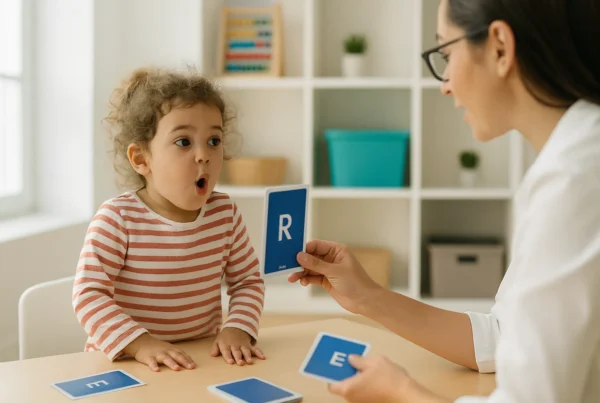

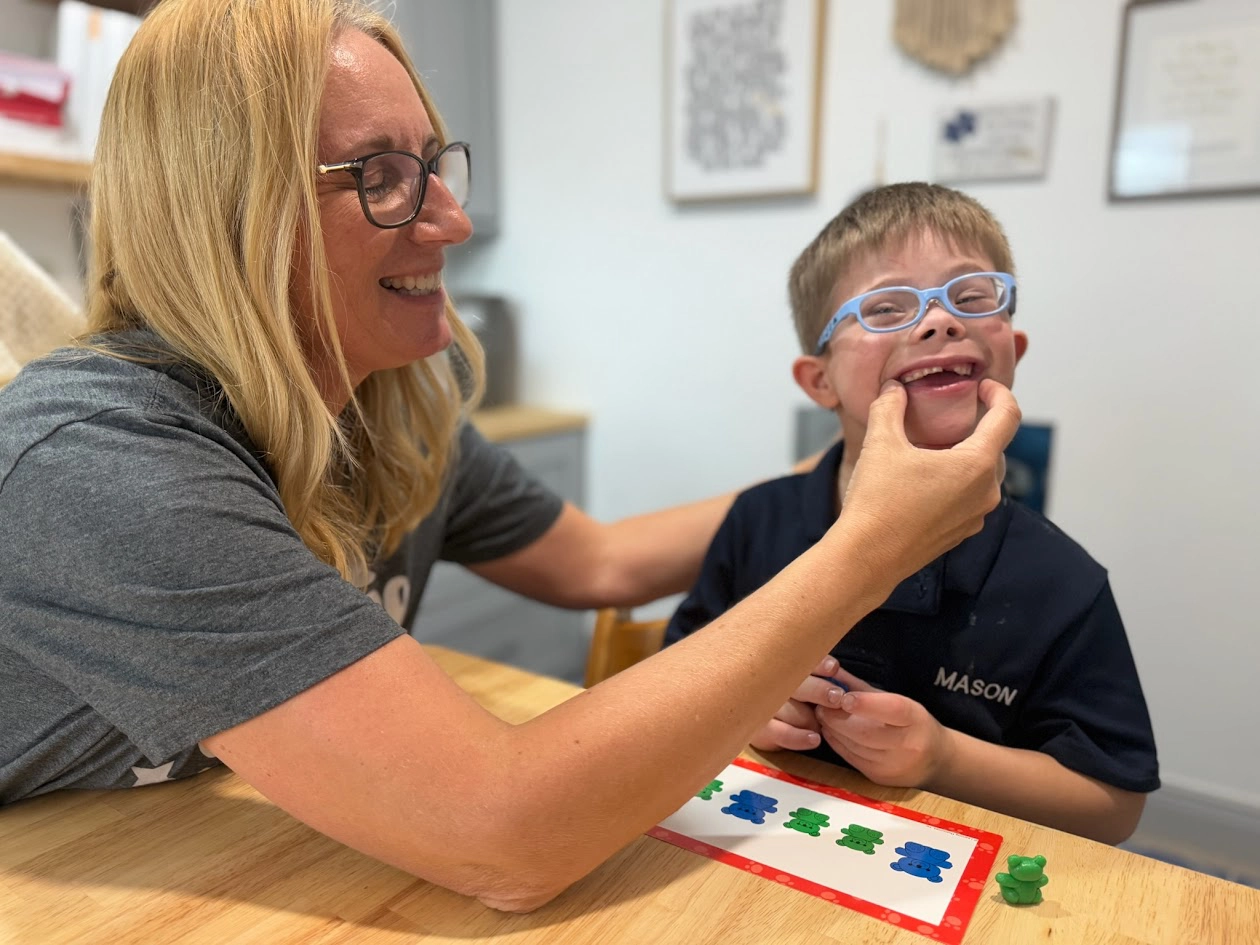

Early Intervention (EI) services provide essential support for children who experience delays in communication, language, or social interaction. These programs are designed to help families address developmental concerns as early as possible. Understanding eligibility helps parents know when to seek an evaluation and what steps to take to access services for their child.
Jill Dews, M.A., CCC-SLP, founder of Let’s Talk Speech and Language Therapy in Mission Viejo, California, has helped families navigate the early intervention process for over two decades. With her master’s degree in Communicative Disorders from California State University, Long Beach, and extensive experience in early childhood development, Jill ensures every evaluation and treatment plan reflects both clinical precision and compassionate care.
What Are Early Intervention Services
Early intervention services offer developmental support to children from birth to age three who show signs of delay in areas such as speech, language, motor skills, or social-emotional development. These programs may include speech-language therapy, occupational therapy, physical therapy, or family education.
In Mission Viejo neighborhoods such as Arroyo Vista, Evergreen Ridge, and Pacific Hills, parents often begin the process after noticing that their child is slower to speak, respond, or engage with others. Early identification and support can make a profound difference in long-term communication and learning.
Who Qualifies for Early Intervention
Eligibility for early intervention services is determined through standardized assessments and observations by qualified professionals. Each state follows its own criteria, but most programs evaluate a child’s performance in communication, cognitive, physical, social-emotional, and adaptive skills. Children may qualify if they show a delay in one or more of these developmental areas.
Families can request an evaluation directly, or pediatricians may recommend one if concerns arise during checkups. The process typically includes interviews, play-based assessments, and observation of how a child communicates and interacts. The goal is to make the evaluation comfortable and informative for both parents and children.
Common Reasons a Child May Qualify
- Speech and language delays: Late talking, unclear speech, or difficulty understanding directions.
- Developmental concerns: Limited social engagement or challenges with motor coordination.
- Hearing or medical factors: Conditions that may impact speech and learning.
If a child meets the criteria for services, a personalized plan is created with goals that reflect their specific developmental needs. Each plan is family-centered, helping caregivers understand how to continue supporting growth at home.

How Eligibility Is Determined
Once a referral is made, an early intervention team conducts an evaluation. This includes standardized testing and parent input to ensure that results reflect real-world behavior. The team then reviews results to determine whether the child’s developmental level is significantly below age expectations.
If eligibility is confirmed, an Individualized Family Service Plan (IFSP) is created. This plan outlines the child’s goals, therapy frequency, and strategies for parents to support learning at home. Families are encouraged to ask questions and remain active participants throughout the process.
What to Expect During the Evaluation Process
- Family interview: Parents share developmental milestones and concerns.
- Play-based assessment: Specialists observe interaction, play, and communication.
- Feedback meeting: The team explains results and recommends next steps.
The evaluation is designed to be supportive, not stressful. It helps families understand where their child is developmentally and what types of therapy may help most. Parents leave the process with clarity and a clear action plan.
Comparing Public and Private Early Intervention Options
| Aspect | Public EI Programs | Private EI Services |
| Cost | Often free or low-cost through state funding | Fee-based with insurance or private pay options |
| Access | Available through regional centers or school districts | Direct scheduling with private clinics |
| Flexibility | Based on state guidelines and resources | Customized schedules and family-centered plans |
| Wait Times | May be longer depending on demand | Often shorter with personalized attention |
Both options provide valuable support, but private early intervention services can offer greater flexibility and individualized care. Many families choose to combine both public and private services for the best results and continuity of care.
Why Early Eligibility Matters
The earlier a child receives support, the greater their chance of long-term success. Early detection not only helps build communication and language skills but also strengthens emotional well-being and confidence. Children who receive intervention before age three often show faster improvement and stronger social engagement.
Parents in Mission Viejo who seek evaluation early often find peace of mind knowing they have taken proactive steps for their child’s development. The process provides clear answers, structured guidance, and hope for steady growth. When families work with experienced specialists, they gain both reassurance and measurable progress.
Taking the Next Step
At Let’s Talk Speech and Language Therapy, our team led by Jill Dews, M.A., CCC-SLP, provides expert evaluations and personalized therapy plans for children who may qualify for early intervention. We guide families through every step, from the first assessment to ongoing progress tracking. Our goal is to make the process collaborative, encouraging, and tailored to each family’s needs.
If you have concerns about your child’s speech or language development, schedule a consultation today. Together, we’ll identify your child’s needs and create a path toward confident, effective communication.
Let’s Talk Speech and Language Therapy
27285 Las Ramblas, Suite #210
Mission Viejo, California 92691
(949) 218-0508
Driving Directions
Jill Dews, M.A., CCC-SLP
CA License #: SP12461
Link to Verify License
Frequently Asked Questions
How do I know if my child needs an evaluation?
Early identification is key to helping children succeed, and knowing when to seek an evaluation can lead to timely support and intervention.
What people should be asking instead: What signs suggest my child might benefit from an early intervention screening?
- Any child not meeting expected speech, language, or developmental milestones should be considered for an evaluation.
- The CDC recommends developmental screenings whenever there are concerns about communication, social interaction, or learning, while ASHA notes that parent observations are a crucial trigger for further assessment.
- Early screening is always better than a “wait and see” approach—children referred early usually improve fastest.
Early Intervention Services – ASHA
What age range qualifies for early intervention services?
Understanding eligibility ensures that families get the right help at the right developmental stage.
What people should be asking instead: Who is eligible for early intervention, and what happens as children age out?
- Most early intervention programs in the U.S. serve children from birth up to their third birthday—sometimes through state “Early Start” or “Part C” programs.
- After age three, children who need further assistance can transition to school-based services or continue with private therapy as needed.
- Eligibility is determined by evaluation, and age cutoffs may vary slightly by state or program.
Speech-Language Pathology Medical Review Guidelines – ASHA
Can my pediatrician refer me for early intervention?
Knowing how to access care streamlines the process and reassures families that asking for help is simple and supported.
What people should be asking instead: Do referrals have to come from a doctor, and can parents self-refer?
- Pediatricians routinely screen for developmental delays at well-child visits and regularly refer families for early intervention when concerns arise.
- Parents are also empowered to contact local early intervention agencies, public programs, or private clinics directly for an evaluation—no doctor’s referral is required, though it is common practice.
- Early intervention providers work collaboratively with pediatricians and parents to guide next steps and coordinate care.