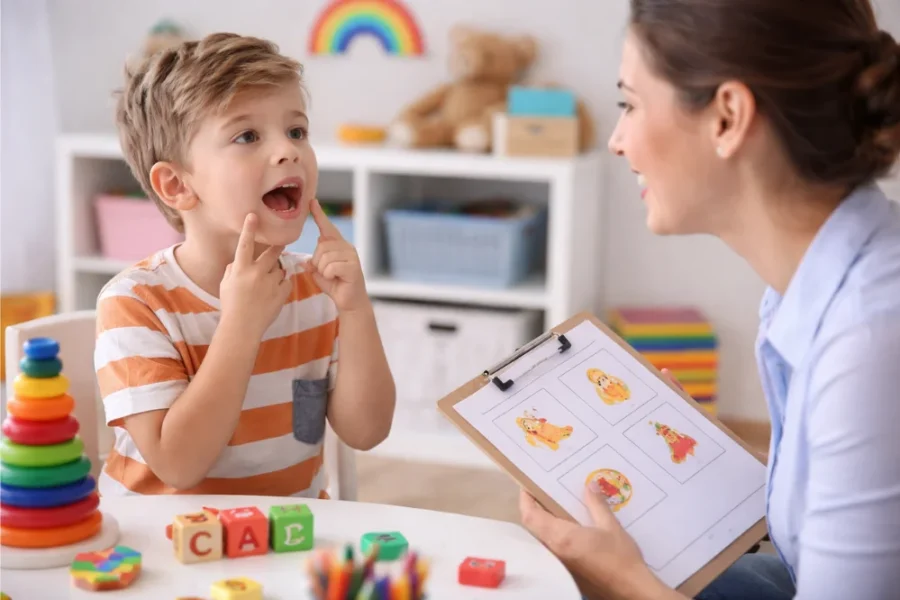
Speech therapy exercises work best when children have fun while learning, making play-based activities the foundation of successful communication development.…
Phonological processing and articulation both affect how a child’s speech sounds, yet they are not the same type of difficulty. Articulation involves how individual sounds are physically produced, while phonological…
Phonological processing difficulties affect how a child’s brain hears, organizes, and uses speech sounds. When sound patterns do not develop as expected, speech can remain unclear and reading can later…
If your child says the same word differently every time, or their speech sounds choppy and hard to understand, you may be wondering if these are signs of apraxia of…
If your child knows what they want to say but the words come out jumbled, choppy, or inconsistent, you may be wondering if it could be childhood apraxia of speech.…
Children begin communicating long before they say their first clear words. Child speech milestones include sounds, gestures, and early interactions that slowly turn into words and short phrases. Parents often…
Speech or language delays show up when a child is not communicating the way most children their age typically do. Speech delay signs can include difficulty being understood, limited words,…
A child may need speech therapy when communication challenges start to interfere with daily life. Child speech therapy can support speech sounds, language understanding, and social communication when a child…
Pediatric speech therapy helps children build communication skills they use every single day. Pediatric speech therapy supports how children speak, understand language, and interact with others in real-life situations like…