
Children begin communicating long before they say their first clear words. Child speech milestones include sounds, gestures, and early interactions that slowly turn into words and short phrases. Parents often wonder what development usually looks like at each age and whether their child is on track or may need support.
At Let’s Talk Speech and Language Therapy, families across Mission Viejo ask this question every day. They are not looking for exact deadlines or pressure. They want realistic expectations and clear guidance about when to watch and when to act.
Experience and Expertise You Can Trust
This practice is led by Jill Dews, M.A., CCC-SLP, a licensed Speech-Language Pathologist with more than twenty years of experience working with children and families. Jill founded Let’s Talk Speech and Language Therapy in 2002 with a strong focus on early intervention and family-centered care.
Before opening her private practice, Jill worked in the Capistrano Unified School District, supporting children across many developmental stages. She earned her Master’s degree in Communicative Disorders from California State University, Long Beach. She also created the Let’s Talk Early Intervention App to help families support communication growth at home.
Early Communication Before Talking Begins
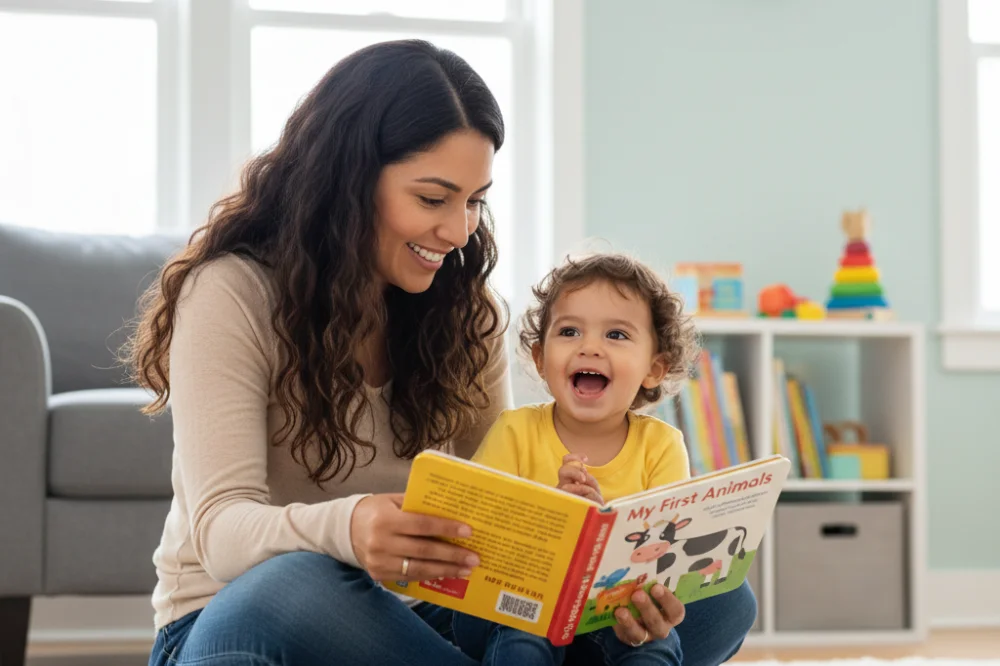
Children start communicating long before they use words. Child speech milestones in the first year include eye contact, cooing, babbling, and using gestures like pointing or waving. These early behaviors are important because they show a child is learning how communication works.
Back-and-forth interactions teach children turn-taking and meaning. Even without spoken words, language learning is already happening. These early skills set the foundation for later speech development.
When First Words Usually Appear
Many children say their first words around their first birthday. Child speech milestones at this stage often include simple words like “mama,” “dada,” or names of familiar objects. Some children reach this milestone earlier, while others take a little longer.
Between twelve and eighteen months, vocabulary often grows slowly at first. Children may understand many more words than they can say. This gap between understanding and speaking is very common.
How Vocabulary and Phrases Develop
As toddlers approach age two, child speech milestones often include a noticeable increase in spoken words. Many children begin combining two words into short phrases like “more milk” or “go outside.” This shows growing language understanding.
Vocabulary growth does not always happen in a straight line. Some children add many words quickly, while others progress more gradually. Both patterns can be typical when overall development is moving forward.
Common Child Speech Milestones by Age
Parents often want a general picture of what development may look like at different ages. Child speech milestones provide helpful guidance without creating strict rules or pressure.
Common speech and language milestones include:
- 0–6 months: cooing, smiling, responding to voices
- 6–12 months: babbling, using gestures, responding to name
- 12–18 months: first words, understanding simple directions
- 18–24 months: growing vocabulary, two-word phrases
- 2–3 years: short sentences and early conversation
Children may reach these milestones at different times. What matters most is steady progress rather than exact timing.
Understanding Language Versus Speaking
Language development includes both understanding and expression. Some children follow directions well but speak less. Other children talk frequently but struggle to understand instructions.
Child speech milestones reflect growth in both areas over time. Speech therapy looks at the full picture instead of focusing on words alone. Understanding how a child processes language is just as important as how they speak.
Social Communication as Part of Talking
Talking is only one part of communication. Child speech milestones also include social skills like eye contact, turn-taking, and responding to others. These skills support conversation later on.
Some children talk early but struggle socially. Others are socially engaged but speak less. Speech therapy can support both speech and social communication as children grow.
Signs That Milestones May Signal a Need for Support
Missing one milestone does not automatically mean a child needs speech therapy. However, consistent delays across several child speech milestones may be worth exploring. Parents often notice increased frustration when communication feels hard.
Signs that may suggest extra support could help include:
- No words by around 18 months
- No word combinations by about 2.5 years
- Difficulty understanding simple language
- Limited interaction or response to others
An evaluation helps determine whether support is needed or if development is simply following a different pace.
How Speech Therapy Supports Development
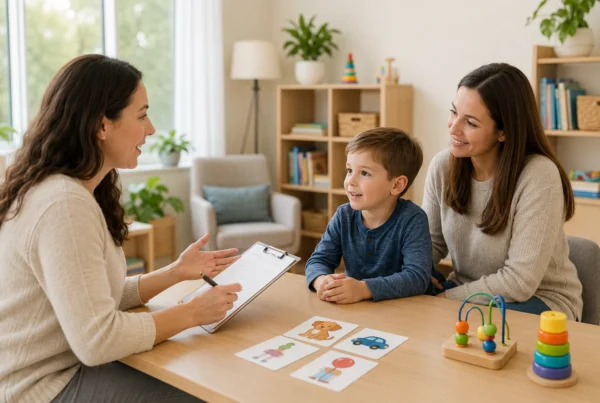
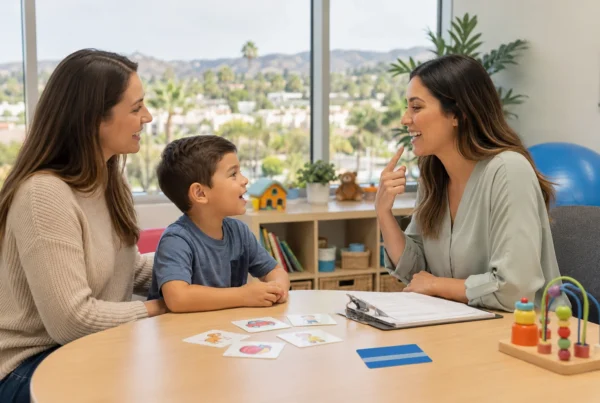
Speech therapy supports children at many stages of development. Therapy is tailored to a child’s age, strengths, and needs. Sessions are designed to feel engaging and encouraging rather than overwhelming.
Therapists use play, routines, and interaction to support communication growth. Parents are often involved so strategies can be used at home. This collaboration helps skills carry over into daily life.
Child Speech Milestones Compared to Individual Progress
Parents sometimes worry when their child does not match milestone charts exactly. Child speech milestones are guidelines, not deadlines. Every child develops at their own pace.
| Area | Typical Development | When Support May Help |
| First Words | Around 12 months | No words by 18 months |
| Word Combinations | By age 2 | No phrases by 2.5 years |
| Understanding | Follows simple directions | Difficulty understanding language |
| Social Use | Engages with others | Limited interaction |
A speech-language evaluation helps interpret these differences in context. It replaces guesswork with clear information.
Child Speech Milestones and Long-Term Confidence
Speech and language development affects more than communication alone. It supports confidence, learning, and relationships. Building strong skills early can support long-term success.
As children gain communication tools, they often become more engaged and confident. These skills support participation at school and with peers. Parents frequently notice less frustration and stronger connection.
Taking the Next Step
If you are wondering whether your child’s speech milestones are on track, support is available. A speech and language evaluation can provide clarity and reassurance. You do not have to navigate these questions alone.
At Let’s Talk Speech and Language Therapy, families work with professionals who listen and care. Jill Dews and her team focus on real-life communication and meaningful progress. Scheduling a consultation is a simple next step.
Frequently Asked Questions
Is it normal if my child is not talking yet?
Parents ask this because development varies widely. Some children talk later while still developing typically. An evaluation helps determine whether waiting or support is the best option.
Sources: https://www.asha.org/public/speech/development/overview/
https://www.cdc.gov/ncbddd/actearly/milestones/index.html
Do children understand more than they can say?
Many children understand language before they speak clearly. This is a common part of development. Speech therapy looks at both understanding and expression together.
Sources: https://www.asha.org/public/speech/disorders/
https://www.cdc.gov/ncbddd/childdevelopment/index.html
What if my child skips certain speech milestones?
Some children move through milestones differently. Skipping or delaying milestones may still be typical, but consistent delays may benefit from support. An evaluation provides clarity.
Sources: https://www.asha.org/public/earlyintervention/
https://www.cdc.gov/ncbddd/childdevelopment/screening.html
Should I wait or schedule an evaluation?
Parents often struggle with this decision. Scheduling an evaluation does not commit you to therapy. It simply gives you information and guidance.
Sources: https://www.asha.org/public/speech/parent-guide/
https://www.cdc.gov/parents/essentials/communication/index.html