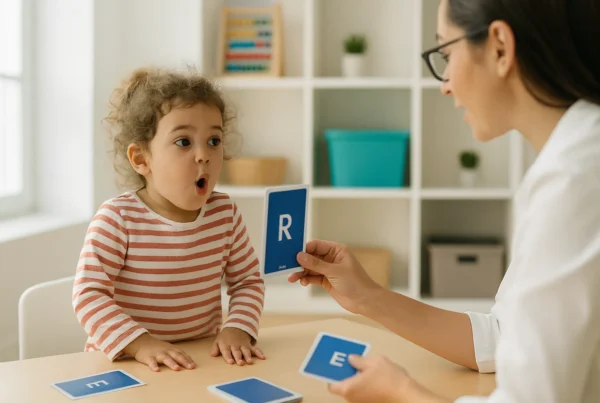



Early Intervention (EI) services can make a lasting impact on a child’s ability to communicate and connect with others. These programs support children during their most critical years of brain development, providing the foundation for speech, language, and social growth. Families who begin early often notice faster progress, stronger family interactions, and more confident communication.
Jill Dews, M.A., CCC-SLP, founder of Let’s Talk Speech and Language Therapy in Mission Viejo, California, has dedicated her career to helping young children find their voice. With a Master’s degree in Communicative Disorders from California State University, Long Beach, and decades of experience in early intervention, Jill’s expertise ensures every session is built on research, compassion, and family collaboration.
Why Early Intervention Makes a Difference
Early intervention takes advantage of a child’s natural ability to learn during their earliest years. Because the brain develops most rapidly before age three, this period provides a unique opportunity to shape how a child communicates and understands language.
In communities like Arroyo Vista, Pacific Hills, and Evergreen Ridge, parents see how early services help children gain confidence. The focus is not just on speaking but also on understanding, listening, and building relationships through communication.
Core Benefits of Early Intervention Services
The benefits of early intervention go far beyond speech. These programs enhance overall development and help children participate more fully in family, school, and social settings. When guided by a skilled speech-language pathologist, EI services can transform daily life for both children and caregivers.
Key Advantages for Children
- Improved communication skills: Children learn to express their wants, needs, and feelings clearly.
- Boosted social interaction: Therapy encourages play, turn-taking, and cooperation.
- Better school readiness: Strong language skills prepare children for literacy and learning.
These benefits build on each other, helping children feel understood and confident as they grow.

The Emotional and Family Benefits
Parents often experience significant relief and empowerment when they understand how to support their child’s communication. Through early intervention, caregivers learn techniques that can be used at home and in daily routines.
Families who actively participate in therapy sessions see faster progress and greater satisfaction. The process becomes a shared journey that strengthens relationships and promotes a positive home environment.
How Families Benefit from EI Services
- Confidence in caregiving: Parents gain skills to help their child thrive at home.
- Closer connections: Shared goals create stronger family bonds.
- Peace of mind: Knowing progress is happening reduces stress and uncertainty.
When families and therapists work together, children gain consistency, encouragement, and emotional security—all essential ingredients for communication success.
Comparing Early vs. Later Intervention
| Factor | Early Intervention | Later Intervention |
| Brain Development | Occurs during peak learning years | May require more time and repetition |
| Family Involvement | High, with active caregiver participation | May focus more on independent learning |
| Progress Rate | Often quicker and more sustainable | May take longer to achieve similar goals |
| Confidence Building | Starts early, promoting long-term self-esteem | Gains may come later in development |
Early intervention lays the groundwork for long-term communication success. Waiting until later can still bring improvement, but starting early gives children the advantage of time and neuroplasticity.
Beyond Speech: Long-Term Success
The progress made through early intervention doesn’t stop when therapy ends. Children who build language skills early often experience stronger academic performance, better emotional regulation, and improved problem-solving abilities later in life. These foundational skills open doors for learning, friendships, and self-expression.
Families in Mission Viejo and nearby communities continue to see how early support helps children grow into confident, capable communicators ready to take on the world around them.
Taking the Next Step
At Let’s Talk Speech and Language Therapy, every early intervention session is designed to help children achieve lasting communication success. Led by Jill Dews, M.A., CCC-SLP, our team combines proven strategies, family education, and individualized care to help your child reach their full potential.
If you suspect your child may benefit from early intervention, reach out today to schedule a consultation. Together, we can create a plan that supports your child’s speech and language development and helps them build confidence that lasts a lifetime.
Let’s Talk Speech and Language Therapy
27285 Las Ramblas, Suite #210
Mission Viejo, California 92691
(949) 218-0508
Driving Directions
Jill Dews, M.A., CCC-SLP
CA License #: SP12461
Link to Verify License
Frequently Asked Questions
Why should I start early intervention services before age three?
The early years are a window of opportunity for brain development, setting the stage for future learning and behavior.
What people should be asking instead: How does starting early maximize my child’s progress and potential?
- Early intervention—beginning before age three—takes advantage of rapid brain growth and plasticity, making therapy more effective and long-lasting.
- Children who receive services during this period are more likely to meet developmental milestones, require less special education, and build a stronger foundation for school and life.
- Delaying support can mean lost opportunities for growth that are harder to reclaim later in childhood.
Making Hope a Reality: Early Intervention for Infants and Toddlers (Zero to Three, 2025)
How do EI services improve social and emotional growth?
Early emotional and social skills are critical for relationships, resilience, and learning throughout life.
What people should be asking instead: How does early therapy help children interact, build confidence, and manage emotions?
- Early intervention therapy supports play, cooperation, and emotional understanding, which are key for healthy friendships and self-regulation.
- Studies show children in early intervention develop stronger self-esteem, patience, problem-solving, and adaptability.
- Programs that include families help children practice social skills at home and in daily routines.
How can I access EI services for my child?
Parents need clear paths to getting help quickly, especially when every month counts.
What people should be asking instead: Who should I contact to get an evaluation, and what resources are available?
- Families can start by talking with their pediatrician, who can refer them for evaluation if there are concerns about a child’s communication or development.
- Local early intervention programs, regional centers, and certified speech-language pathologists are the main providers of services in most communities.
- Many states offer public programs for children under three, and private clinics may also provide services—no formal diagnosis is needed to request an assessment.
California Department of Developmental Services – Early Start