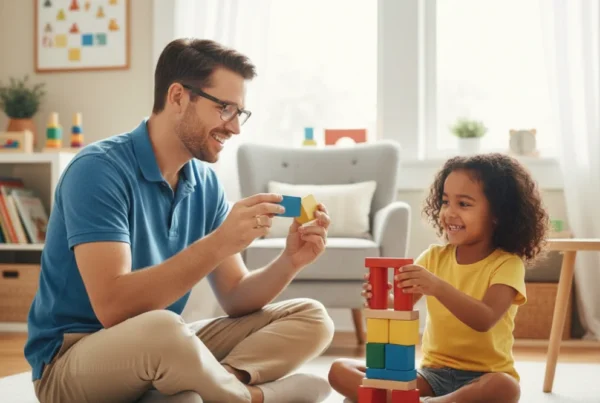



Pediatric speech therapy helps children build communication skills they use every single day. Pediatric speech therapy supports how children speak, understand language, and interact with others in real-life situations like home, school, and play. When communication feels hard for a child, therapy helps make it feel more manageable and less frustrating.
At Let’s Talk Speech and Language Therapy, families across Mission Viejo often come in feeling unsure and overwhelmed. They are not looking for complicated explanations or labels. They want clear answers and a plan that makes sense for their child.
Experience and Expertise You Can Trust
This practice is led by Jill Dews, M.A., CCC-SLP, a licensed Speech-Language Pathologist with more than twenty years of experience working with children and families. Jill founded Let’s Talk Speech and Language Therapy in 2002 with a focus on early intervention and family-centered care.
Before opening her private practice, Jill worked in the Capistrano Unified School District, collaborating with teachers, families, and specialists. She earned her Master’s degree in Communicative Disorders from California State University, Long Beach. She also created the Let’s Talk Early Intervention App to help families support communication development at home.
How Pediatric Speech Therapy Helps Children Communicate
Pediatric speech therapy focuses on helping children express thoughts, needs, and ideas more clearly. Some children know what they want to say but struggle with speech sounds. Other children have difficulty understanding language or keeping up with conversations.
Speech therapy supports speech clarity, vocabulary development, sentence building, and social communication skills. It can also address voice or feeding concerns when those challenges affect daily routines. Therapy builds skills gradually so children gain confidence over time.
Signs Your Child May Benefit From Pediatric Speech Therapy
Many parents notice communication concerns long before they talk to a professional. Pediatric speech therapy can help when challenges begin affecting learning, behavior, or social interaction. Trusting your instincts is often the right first step.
Some children use fewer words than expected or have speech that is hard to understand. Others struggle with directions, peer interaction, or expressing emotions. Feeding challenges such as gagging or limited food acceptance can also be related.
Common Communication Challenges Pediatric Speech Therapy Addresses
Every child’s communication needs are different, which is why therapy plans are individualized. Pediatric speech therapy focuses on challenges that affect daily communication rather than isolated test results.
Common areas supported through pediatric speech therapy include:
- Speech clarity and sound production
- Vocabulary growth and sentence building
- Understanding directions and questions
- Social communication and conversation skills
- Feeding, chewing, or swallowing concerns
These areas are addressed using activities that connect directly to daily routines. This helps children apply new skills more naturally at home, school, and in social settings.
What Happens During a Pediatric Speech Therapy Evaluation
A pediatric speech therapy evaluation is designed to feel comfortable and child-friendly. The therapist observes your child during play and conversation while parents share concerns, history, and goals. This helps create a full picture of how your child communicates.
Standardized tools may be used, but they are balanced with real interaction. The evaluation is not about labeling a child. It is about identifying strengths, challenges, and helpful next steps.
What Pediatric Speech Therapy Sessions Are Like
Pediatric speech therapy sessions are active and engaging. Therapy often looks like play, but each activity is selected with a specific communication goal in mind. Children learn best when they feel safe and supported.
Therapists model language, encourage attempts, and celebrate progress. Parents are often involved so strategies can be used outside of sessions. This teamwork helps skills show up in daily life.
How Parents Support Pediatric Speech Therapy at Home
Parents play an important role in therapy progress. Pediatric speech therapy works best when communication skills are practiced during everyday moments, not just during sessions. Home support does not need to feel overwhelming.
Helpful ways parents support progress at home include:
- Modeling clear, simple language during daily routines
- Expanding on what a child says instead of correcting
- Reading together and talking about pictures and stories
- Using mealtimes and playtime as natural practice moments
Consistent home support helps children generalize communication skills across settings. Small daily interactions make a meaningful difference over time.
When to Start Pediatric Speech Therapy
Many parents wonder whether they should wait and see. Pediatric speech therapy can begin as soon as concerns appear, and early support often leads to stronger outcomes. Acting early can reduce frustration for both children and parents.
That said, older children also benefit from therapy that builds confidence and communication skills. It is never too late to support a child’s ability to communicate effectively. An evaluation can help guide timing.
Pediatric Speech Therapy at Let’s Talk Speech and Language Therapy
At Let’s Talk Speech and Language Therapy, pediatric speech therapy is personalized and family-centered. Services support speech, language, social communication, and feeding challenges based on each child’s needs. Therapy plans focus on strengths as well as areas that need support.
Families across Mission Viejo choose the practice for its experience and compassionate approach. Parents are treated as partners throughout the process. This collaboration supports meaningful, lasting progress.
Pediatric Speech Therapy Compared to School-Based Services
Parents often ask how private pediatric speech therapy compares to school-based services. Both can be helpful, but they serve different purposes depending on a child’s needs and goals.
| Area | Pediatric Speech Therapy | School-Based Speech Services |
| Primary Focus | Everyday communication skills | Academic classroom access |
| Session Format | Individualized and family-involved | Often group-based |
| Parent Involvement | Ongoing and encouraged | Limited by school structure |
| Flexibility | Customized goals and pacing | Set by school guidelines |
Some children benefit from both settings, while others do better with one approach. A speech-language pathologist can help families decide what works best.
Pediatric Speech Therapy for Long-Term Confidence
Pediatric speech therapy supports more than speech sounds alone. Communication affects confidence, learning, and relationships throughout a child’s life. Therapy focuses on building skills that last.
As children gain communication tools, they often become more confident and engaged. These changes support success at school and in social settings. Parents frequently notice reduced frustration and better connection.
Taking the Next Step With Pediatric Speech Therapy
If communication feels like a daily struggle, support is available. Pediatric speech therapy helps families move forward with clarity and confidence. You do not have to navigate this alone.
At Let’s Talk Speech and Language Therapy, families work with professionals who listen and care. Jill Dews and her team focus on real-life communication and meaningful progress. Scheduling a consultation is a simple next step.
Frequently Asked Questions
What does pediatric speech therapy help with?
Parents ask this because they want to know if therapy fits their child’s needs. Pediatric speech therapy supports speech sounds, language development, social communication, and feeding challenges. A professional evaluation helps identify priorities.
Sources: https://www.asha.org/public/speech/development/overview/
https://www.cdc.gov/ncbddd/childdevelopment/positiveparenting/infants.html
How long does pediatric speech therapy usually last?
Families want realistic expectations and a clear plan. Therapy length depends on the child’s needs and goals, and progress is reviewed regularly. Therapy plans adjust as skills develop.
Sources: https://www.asha.org/public/speech/disorders/
https://www.cdc.gov/ncbddd/childdevelopment/screening.html
Do parents need to be involved in pediatric speech therapy?
Parents want to help without overwhelming their child. Parent involvement strengthens outcomes when it fits naturally into daily routines. Therapists guide caregivers on practical strategies.
Sources: https://www.asha.org/public/speech/parent-guide/
https://www.cdc.gov/parents/essentials/communication/index.html
When should I consider pediatric speech therapy?
Parents worry about acting too early or too late. Pediatric speech therapy can help when communication challenges affect daily life. An evaluation provides clarity and guidance.
Sources: https://www.asha.org/public/earlyintervention/
https://www.cdc.gov/ncbddd/actearly/milestones/index.html