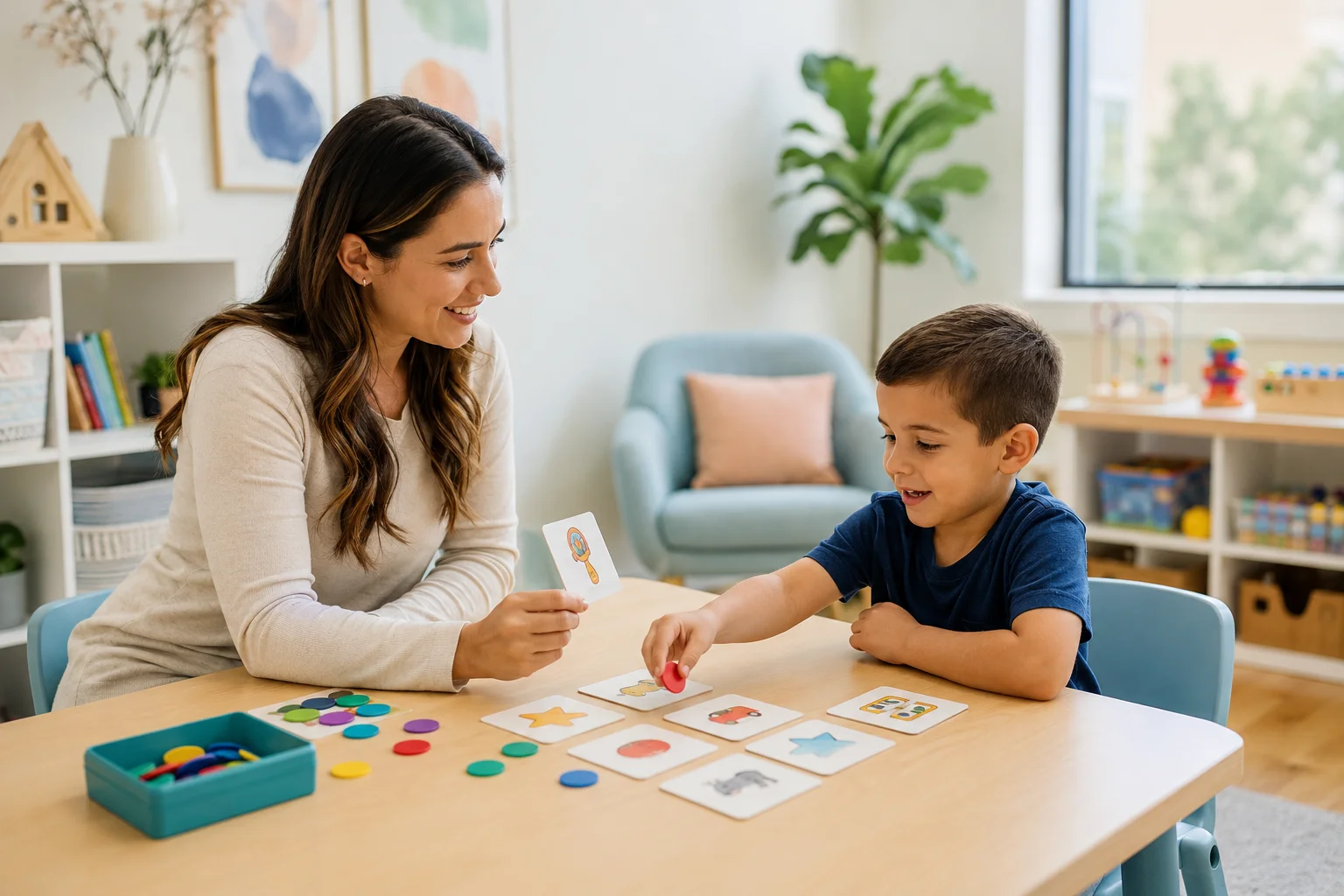

A phonological processing disorder is one of the most common reasons children remain difficult to understand even after months of working on speech. Jill Dews, MA, CCC-SLP founded Let’s Talk Speech and Language Therapy in Mission Viejo in 2002. She has diagnosed and treated phonological disorders in children from Painted Trails, Madrid Del Lago, and Aegean Hills. This article explains what the disorder is, how it differs from an articulation disorder, and what phonological processing therapy looks like at Let’s Talk.
Many families arrive at Let’s Talk having already tried speech therapy that did not produce the results they expected. The reason is often that the wrong disorder was identified at the start. Phonological processing disorders and articulation disorders look similar on the surface but require completely different treatment. Families driving in from Aliso Viejo along the 73 to Crown Valley Parkway or from Laguna Niguel up Marguerite Parkway deserve a therapist who gets the diagnosis right from the start before treatment begins.
What Is a Phonological Processing Disorder?
A phonological processing disorder is a difficulty with the sound system of language, not the physical production of individual sounds. Children with this disorder apply incorrect rules to whole classes of sounds at once. A child might delete the final consonant from every word, or substitute front-of-mouth sounds for back-of-mouth sounds throughout their speech. These patterns are called phonological processes. They become disordered when they persist beyond the age they should have resolved.
This disorder is not caused by a lack of intelligence or insufficient language exposure. It is a neurologically-based difference in how the child’s brain organizes their language’s sound system. Genetic factors play a role, and early ear infections during the critical window between birth and age 3 can disrupt phonological development. Early identification gives these children the best chance of developing clear communication before the disorder affects reading and literacy as well.
What Are the Signs a Child Has a Phonological Processing Disorder?
Parents often notice something is off before they know what to call it. A child with this disorder makes consistent, patterned errors across many different words rather than struggling with one or two isolated sounds. The patterns below are the ones Jill Dews most commonly sees at Let’s Talk and the clearest signals that a formal evaluation is warranted.
- Final consonant deletion at age 3 or older
- Back-of-mouth sounds replaced with front-of-mouth sounds
- Syllable deletion in longer words beyond age 3
- Same error type across all words regardless of context
- Difficult to understand by unfamiliar adults by age 4
If you recognize two or more of these patterns in your child’s speech, an evaluation at Let’s Talk is the right next step. Only a formal evaluation can confirm the diagnosis and determine which patterns need to be addressed first.
How Is a Phonological Processing Disorder Different From an Articulation Disorder?
The distinction between these two conditions determines whether treatment works or wastes months going in the wrong direction. The table below shows the key differences at a glance.
| Feature | Phonological Disorder | Articulation Disorder |
| Core problem | Sound rule system | Physical sound production |
| Error pattern | Affects whole classes of sounds | Affects one or two specific sounds |
| Sound in isolation | Often correct | Usually incorrect |
| Treatment focus | Sound system reorganization | Motor pattern for specific sound |
| Age of concern | Patterns persisting past age 5 | Sound errors past typical age |
A child with a phonological disorder can often produce the target sound in isolation but applies an incorrect rule in connected speech. A child with an articulation disorder struggles with the sound even alone. Jill evaluates both possibilities at every Let’s Talk assessment before any treatment plan is discussed with the family.

How Does Let’s Talk Diagnose and Treat a Phonological Processing Disorder?
Jill diagnoses phonological processing disorders through a comprehensive evaluation. She uses standardized assessment tools, analyzes speech sound patterns across multiple contexts, and compares them to age-based norms. The evaluation confirms which phonological processes are present, whether they have persisted past the expected age, and rules out co-occurring conditions including articulation disorders, language delays, and childhood apraxia of speech. Every family leaves with a clear diagnosis and a realistic picture of what treatment involves before any commitment is made.
- Cycles Phonological Remediation
- Minimal Pairs Treatment
- Targets chosen by intelligibility impact
- Home practice between sessions
- Parent training in every session
Progress is tracked through accuracy data at every session and reviewed with parents on a clear schedule. Families from San Juan Capistrano up Crown Valley Parkway or from Rancho Santa Margarita along the 241 always know which patterns are improving and what comes next in treatment.
What Happens If a Phonological Processing Disorder Goes Untreated?
The most significant consequence of untreated phonological disorders is the impact on reading and literacy. Research directly links poor phonological awareness to difficulties with reading, spelling, and decoding. A child who cannot hear and manipulate the sound units in spoken words will struggle to map those sounds onto letters when learning to read. This is why early identification and treatment matters well beyond the speech therapy room.
The good news is that early treatment produces measurable results. Many children with mild to moderate phonological disorders show real improvement in intelligibility within 3 to 6 months of consistent therapy. Children with more severe patterns may need 12 to 18 months. Families from Painted Trails in Mission Viejo and those making the drive from Laguna Hills along Alicia Parkway consistently report that treatment at Let’s Talk produces progress they can hear in their child’s daily conversation.
Starting Phonological Processing Therapy at Let’s Talk in Mission Viejo
Parents in Mission Viejo and across South Orange County who suspect their child has a phonological processing disorder deserve a clear diagnosis backed by a proper evaluation. Jill Dews, MA, CCC-SLP has spent more than two decades helping families along Oso Parkway, Crown Valley Parkway, and throughout the Saddleback Valley understand what is driving their child’s speech patterns and how to address it.
Call Let’s Talk at (949) 218-0508 to schedule an evaluation for your child today. Jill Dews, MA, CCC-SLP and her team at letstalkspeechandlanguagetherapy.com will walk you through the evaluation findings and build a treatment plan around your child’s specific pattern profile. Take the first step now and give your child the clarity they deserve.
Frequently Asked Questions
What is the difference between a phonological disorder and an articulation disorder?
An articulation disorder is a problem with the physical production of a specific speech sound. A phonological disorder is a problem with the underlying rule system a child uses to organize sounds in their language. A child with an articulation disorder cannot produce a sound correctly even in isolation. A child with a phonological disorder can often produce the sound in isolation but applies an incorrect rule in connected speech. Research on these two conditions confirms they require fundamentally different treatment approaches.
Can a phonological processing disorder affect my child’s ability to read?
Yes, and this is one of the most important reasons to identify it early. Phonological processing skills are directly linked to a child’s ability to learn to read, spell, and decode written language. Children with phonological processing disorders have a significantly higher rate of reading difficulties than their peers. The relationship between phonological awareness and literacy is one of the most consistent findings in child development research. Treating the disorder early protects both speech clarity and academic readiness.
At what age should a phonological processing disorder be treated?
Treatment is most effective when started as early as the disorder is identified, typically between ages 3 and 5. Some phonological processes are normal at ages 2 and 3 but become disordered if they persist past age 5. Developmental milestones for speech and language provide a helpful guide for when patterns should resolve on their own and when they indicate the need for evaluation. Waiting to see if a child outgrows the patterns costs valuable time during the most responsive developmental window.
How do I know if my child needs a phonological processing evaluation?
If your child is consistently difficult to understand by unfamiliar adults by age 4, or if you notice errors affecting whole categories of sounds rather than one or two isolated targets, an evaluation is warranted. Guidance on pediatric speech development recommends erring on the side of early evaluation rather than waiting. At Let’s Talk in Mission Viejo on Las Ramblas, Jill Dews can clarify whether your child’s patterns reflect normal development or a disorder that needs treatment.
Related Services