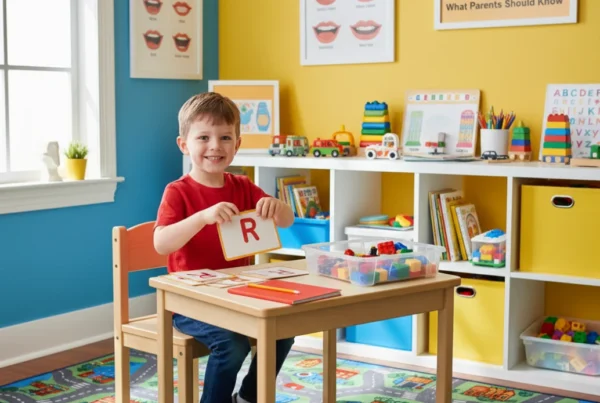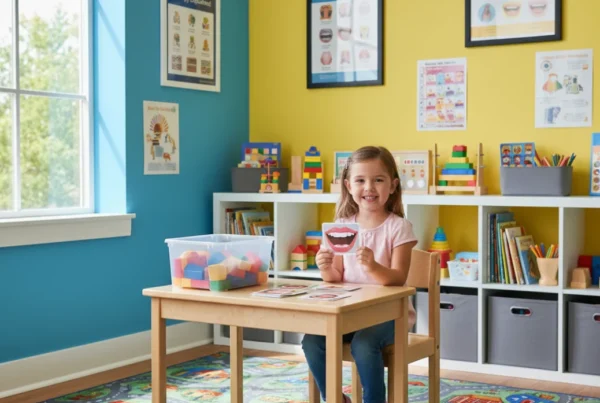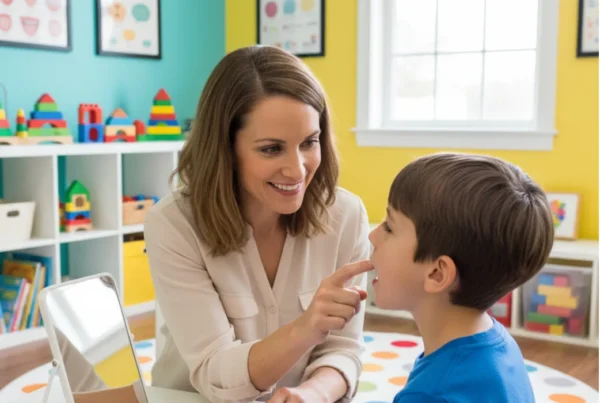



Hearing your child speak clearly for the first time can be a life-changing moment. For many families, articulation and speech therapy have opened doors to better communication, confidence, and connection. These real stories show how consistent effort, professional support, and family involvement lead to meaningful progress.
Jill Dews, M.A., CCC-SLP, founder of Let’s Talk Speech and Language Therapy in Mission Viejo, California, has helped hundreds of children overcome communication challenges. With her master’s degree in Communicative Disorders from California State University, Long Beach, and more than twenty years of experience, she guides families with compassion and expertise. Her approach focuses on evidence-based strategies and empowering parents to be active partners in their child’s growth.
How Families Achieve Success Through Articulation Therapy
Every child’s speech journey is unique, but one thing remains constant: progress happens when therapy and home practice work together. Families in Mission Viejo neighborhoods such as Arroyo Vista, Pacific Hills, and Evergreen Ridge often share how personalized therapy plans helped their children build confidence and clarity in communication.
Children who once struggled to express themselves begin to find their voice through consistent guidance. This transformation does not happen overnight but through small victories that accumulate over time.
What Helps Families See Results
- Individualized therapy plans: Sessions focus on each child’s specific articulation needs and developmental goals.
- Parent involvement: Families who practice between sessions see faster, more lasting improvement.
- Positive reinforcement: Encouragement and praise help children stay motivated and excited to learn.
These combined efforts ensure therapy remains effective, enjoyable, and tailored to each child’s pace and personality.
Stories of Growth and Confidence
At Let’s Talk Speech and Language Therapy, parents often describe how small improvements led to major breakthroughs. One family shared that their daughter, once shy about speaking in class, began participating confidently after a few months of articulation exercises. Another parent noted that their son now initiates conversations with friends, something that seemed impossible before therapy began.
These milestones demonstrate how speech therapy goes beyond improving sounds. It builds self-esteem, connection, and joy in communication. For many families, seeing their child express themselves clearly is one of the most rewarding experiences.
Common Milestones in Articulation Progress
- Improved sound accuracy: Clearer pronunciation of target sounds during conversation.
- Better social interaction: Increased participation at school and in group play.
- Enhanced emotional confidence: Children feel proud of their progress and eager to communicate.
Each success reinforces that therapy works best when families and professionals collaborate closely. Encouragement at home and consistent follow-through make every achievement more meaningful.

Comparing Initial Challenges and Therapy Outcomes
| Stage | Before Therapy | After Therapy |
| Speech Clarity | Frequent sound errors | Noticeable improvement in articulation |
| Confidence | Hesitant to speak or answer questions | Increased participation in conversations |
| Family Involvement | Unsure how to support speech goals | Active, consistent engagement in home practice |
| Emotional Impact | Frustration or avoidance of speech | Pride and enthusiasm in communication |
Progress varies by child, but the overall pattern remains consistent. Dedicated effort, guided therapy, and family collaboration lead to remarkable outcomes.
Why Family Involvement Makes the Difference
Parents are the most important partners in their child’s speech journey. By incorporating daily speech practice into playtime, storytime, or meals, they create natural opportunities for communication. Children thrive when they feel supported and encouraged at home.
Jill Dews and her team emphasize family education during every session. Parents learn how to model correct sounds, track progress, and celebrate small victories. These moments of encouragement transform therapy from a clinic activity into a shared family success.
Taking the Next Step
At Let’s Talk Speech and Language Therapy, we believe that every success story begins with a single step. Led by Jill Dews, M.A., CCC-SLP, our team helps children and families build lasting progress through clear goals, compassionate support, and consistent communication.
If your child is working toward clearer speech or you are exploring articulation therapy options, contact us today. Together, we will help your family start the next success story, one word at a time.
Let’s Talk Speech and Language Therapy
27285 Las Ramblas, Suite #210
Mission Viejo, California 92691
(949) 218-0508
Driving Directions
Jill Dews, M.A., CCC-SLP
CA License #: SP12461
Link to Verify License
Frequently Asked Questions
How long does it take to see progress in speech therapy?
Parents want to set realistic expectations for improvement and understand what factors support effective progress.
What people should be asking instead: How quickly will my child’s speech improve and what affects the timeline?
- Most children start to show noticeable improvement within a few weeks to a couple of months of consistent therapy and daily practice at home.
- The pace of progress depends on your child’s age, the specific type and severity of their speech disorder, and the level of family participation in assigned activities.
- Ongoing communication between the therapist and family ensures that practice stays fun and motivating for the child, speeding up results.
How Long Does Speech Therapy Take? Your Guide to Progress (Connected Speech Pathology, 2025)
What role do parents play in achieving results?
Research shows that children with active home support make the fastest gains in therapy.
What people should be asking instead: How does my involvement make a difference in my child’s progress?
- Parent involvement in practicing assigned activities, modeling speech at home, and using positive feedback is the single biggest factor in rapid and lasting improvement.
- Families who engage with home practice and communicate with the therapist help reinforce new skills across daily routines, making progress more sustainable.
- Encouragement and consistency, not just perfection, are what fuel a child’s motivation and success.
Parent Practice: Speech Practice Tips for Parents (CDC)
Can speech therapy help with confidence and social skills?
Parents want to know therapy is about more than just “fixing” sounds, it shapes a child’s whole self-image.
What people should be asking instead: How does improving speech make my child more confident in life and school?
- Yes, when children learn to express themselves clearly, they become more confident, independent, and socially engaged.
- Speech therapy enhances self-esteem, reduces frustration and anxiety, and empowers children to participate fully in friendships and classroom activities.
- Social communication goals are often part of therapy, helping children master conversation skills, turn-taking, and emotional expression.
Speech, Language, and Feeding Milestones for Children Birth to 5 (Zero to Three, 2025)