
When a teacher or family member mentions that a child is hard to understand, most parents in Mission Viejo want two answers right away: what is causing it and what will it cost to address. Jill Dews, MA, CCC-SLP, founded Let’s Talk Speech and Language Therapy in 2002 to give South Orange County families honest answers and skilled early intervention without the runaround. She has spent more than two decades helping children in Palmia, Evergreen Ridge, and surrounding communities find their voice.
Articulation therapy cost depends on the sounds involved, how early therapy begins, and how consistently sessions happen week to week. Starting sooner almost always means fewer total sessions to reach the goal, which brings the overall investment down even when the per-session rate feels significant. Jill Dews and her team at Let’s Talk walk every family through exactly what to expect before anyone commits to a single appointment.
What Articulation Therapy Costs Per Session in Mission Viejo
Private articulation therapy sessions in Mission Viejo typically run between $150 and $250 per session depending on session length and the provider. Initial evaluations are billed separately and generally range from $200 to $400 based on the scope of the assessment. Most practices offer both 30-minute and 60-minute sessions, and the length affects both the rate and the pace of progress toward clear speech.
Parents in Canyon Crest and Pacific Hills often ask whether private articulation therapy is worth the out-of-pocket investment compared to waiting on the school district. The honest answer depends on the specific sounds involved and how much the difficulty is affecting your child’s confidence and communication in daily life. The R sound and other late-developing sounds are rarely addressed through school services until a child is well into elementary school, and private therapy fills that gap earlier.
Does Insurance Cover Articulation Therapy for Kids?
Insurance coverage for articulation therapy can be trickier than coverage for broader speech and language delays. Many plans require documentation showing that the articulation disorder affects the child’s ability to function, so knowing how to frame the request to your insurer before scheduling makes a real difference.
Here is what to check with your insurance provider before booking at Let’s Talk:
- Ask whether articulation therapy specifically is covered or whether the plan only covers broader speech-language disorders
- Confirm whether a physician referral or prior authorization is required before sessions begin
- Ask how many therapy sessions per calendar year your plan will approve
- Find out whether Let’s Talk Speech and Language Therapy is in-network under your current plan
- Ask whether the evaluation is billed as a separate claim from ongoing weekly sessions
- Confirm your deductible status and whether out-of-pocket costs apply before coverage begins
Even partial coverage adds up meaningfully over a full course of articulation therapy. The Let’s Talk team helps Mission Viejo families sort through the insurance piece from the start so they can focus entirely on their child’s progress.
How Articulation Therapy Differs From General Speech Therapy
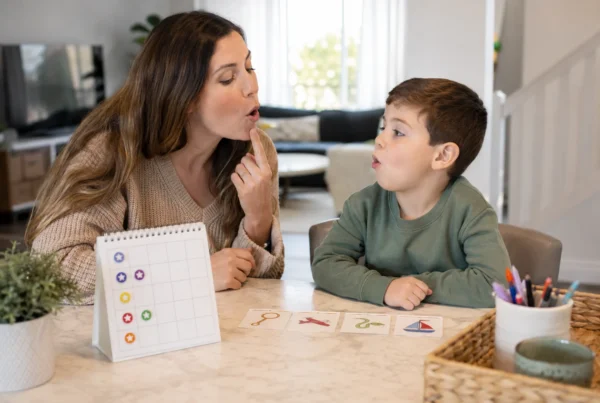
A lot of parents use the terms speech therapy and articulation therapy interchangeably, but they are not the same thing. General speech therapy covers a wide range of concerns including language development, fluency, voice, and social communication. Articulation therapy is a specific type of speech therapy focused entirely on how a child produces individual sounds.
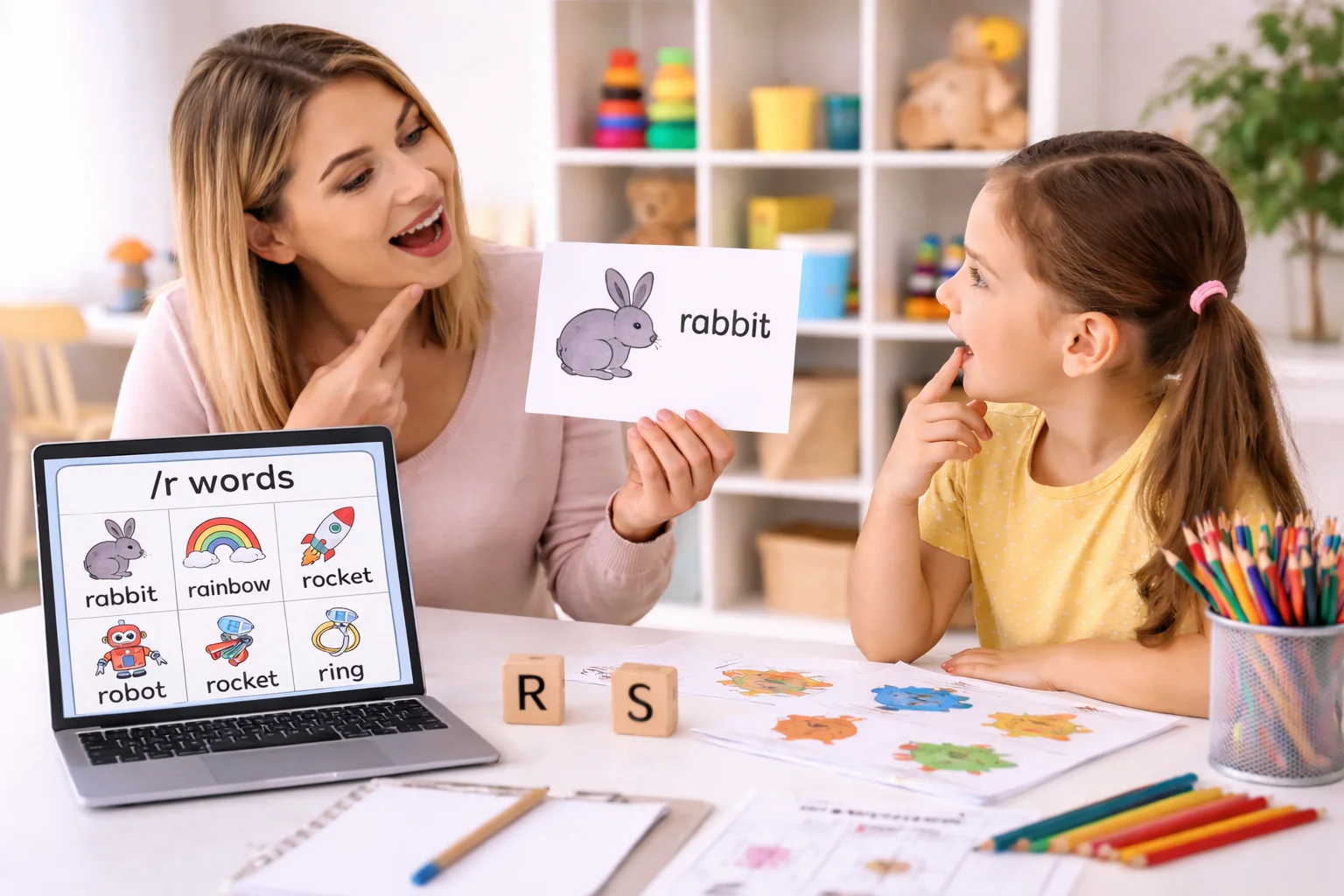
If a child substitutes one sound for another, leaves sounds off the ends of words, or cannot produce certain sounds at all, articulation therapy is the targeted approach that addresses those patterns directly. Jill Dews uses evidence-based articulation techniques at Let’s Talk to move children through sound targets in a sequence that matches how speech development naturally progresses. Parents in Mission Viejo often find that this focused approach produces visible results faster than they expected.
How Many Sessions Does Articulation Therapy Typically Take
The number of sessions depends heavily on which sounds are involved, the child’s age when therapy begins, and how actively parents reinforce targets at home between appointments. This comparison gives families a realistic frame of reference based on common articulation goals.
| Sound or Concern | Typical Age of Concern | Session Frequency | Estimated Duration |
| Early sounds S and Z | Ages 4 to 5 | 1x per week | 3 to 6 months |
| Blends like ST and BL | Ages 5 to 6 | 1x per week | 4 to 8 months |
| L sound | Ages 5 to 6 | 1x per week | 3 to 6 months |
| R sound | Ages 6 to 8 | 1 to 2x per week | 6 to 12 months |
| Multiple sound errors | Any age | 2x per week | 9 to 18 months |
| Phonological patterns | Ages 3 to 5 | 2x per week | 6 to 12 months |
These ranges are general estimates based on typical development patterns recognized by the American Speech-Language-Hearing Association. Jill Dews sets individual goals for every child at Let’s Talk and reviews progress with families on a regular schedule. Children who practice their target sounds at home between sessions consistently move through milestones faster than those who work on them only during appointments.
What Age Is the Right Age to Start Articulation Therapy
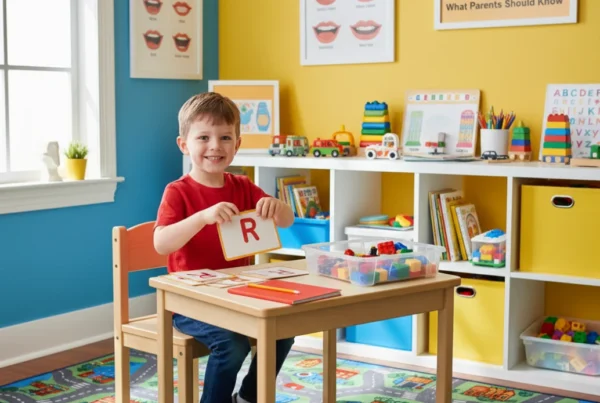
Parents often wonder whether their child will simply outgrow a speech sound problem on their own. Some sounds do develop later than others, and a skilled SLP can tell you quickly whether a child is within the normal developmental window or whether therapy would make a meaningful difference right now. Waiting past the developmental window for a sound like R makes it significantly harder to correct later because the motor patterns become more ingrained over time.
Jill Dews recommends an evaluation whenever a parent, teacher, or pediatrician has a concern, regardless of the child’s age. The evaluation at Let’s Talk takes the guesswork out of the decision entirely. Families in Palmia and Vista del Lago consistently tell Jill they wish they had called sooner rather than taking a wait-and-see approach.
What Families in Mission Viejo See After Starting Articulation Therapy
Parents who bring their children to Let’s Talk for articulation therapy often describe the same shift: the moment their child is understood by someone outside the immediate family for the first time. That moment tends to change everything about how the child carries themselves in conversation. It is what the whole process is working toward.
Here is what families in Mission Viejo consistently notice after the first few months of articulation therapy at Let’s Talk:
- Their child begins using target sounds in words they previously avoided saying out loud
- Confidence in conversation increases noticeably, both at home and in the classroom
- Teachers report that the child is participating more during group discussions and read-aloud activities
- Peers and extended family members begin understanding the child without asking them to repeat themselves
- Parents feel equipped to practice target sounds at home using the techniques Jill teaches during sessions
- Progress toward clear speech feels measurable and trackable from one month to the next
The Let’s Talk Early Intervention App, available on the Apple App Store, extends Jill Dews’ approach directly into the home environment between weekly sessions. Families across Mission Viejo use it to keep target sounds fresh and practiced on the days when there is no scheduled appointment. It is one more way Let’s Talk supports parents who want to stay actively involved in every stage of their child’s progress.
You Have Been Paying Attention. Here Is What to Do Next.
You noticed the pattern, you asked the right questions, and now you are trying to figure out the right move for your child. That kind of attention is exactly what gets kids the help they need before a solvable problem becomes a harder one. Jill Dews, MA, CCC-SLP, is a California licensed Speech-Language Pathologist, a member of the American Speech-Language-Hearing Association, and the founder of Let’s Talk Speech and Language Therapy, where she has spent more than 20 years helping children in Casta del Sol, Palmia, and across South Orange County speak with clarity and confidence.
Schedule an evaluation at Let’s Talk Speech and Language Therapy and walk away knowing exactly which sounds are involved, what the timeline looks like, and what the investment will be. Jill Dews and her team answer every question before you commit to anything. Reach out today at letstalkspeechandlanguagetherapy.com.
Let’s Talk Speech and Language Therapy
27285 Las Ramblas, Suite #210
Mission Viejo, California 92691
(949) 218-0508
Driving Directions
Jill Dews, M.A., CCC-SLP
CA License #: SP12461
Link to Verify License
Frequently Asked Questions
How much does articulation therapy cost in Mission Viejo, CA?
Articulation therapy sessions in Mission Viejo typically range from $150 to $250 per session for private therapy. Initial evaluations run between $200 and $400 depending on the scope of the assessment and the provider. The American Speech-Language-Hearing Association recommends a full evaluation before beginning any articulation treatment plan to confirm the specific sounds and patterns involved. Many insurance plans cover articulation therapy when a physician documents medical necessity, so verifying coverage before scheduling helps reduce out-of-pocket costs from the start.
Will insurance cover my child’s articulation therapy sessions?
Most major insurance plans cover articulation therapy when it is deemed medically necessary and documented correctly by a physician. Coverage requirements vary by plan, and many insurers require prior authorization and a confirmed diagnosis code before approving sessions. The American Speech-Language-Hearing Association advises families to verify whether their plan covers private outpatient therapy specifically, since some plans limit coverage to school-based services. Checking your annual session cap and deductible status before the first appointment prevents unexpected costs partway through treatment.
How long does it take for articulation therapy to work?
How long articulation therapy takes depends on the specific sounds involved, the child’s age when therapy begins, and how consistently sessions and home practice happen. Early sounds like S and Z often resolve within three to six months of weekly sessions, while later-developing sounds like R can take six to twelve months or longer. The American Academy of Pediatrics consistently recommends beginning intervention as soon as a concern is identified rather than waiting to see if the child outgrows it. Children who practice target sounds at home between appointments reach their goals measurably faster than those who work on them only during scheduled sessions.
What is the difference between articulation therapy and speech therapy?
Speech therapy is the broader category covering language development, fluency, voice, and social communication, while articulation therapy is a specific form of speech therapy focused on how a child produces individual speech sounds. A child who substitutes one sound for another, drops sounds from words, or cannot produce certain sounds at all is a candidate for articulation-focused intervention. The National Institute on Deafness and Other Communication Disorders notes that articulation disorders are among the most common communication concerns in school-age children. Private therapy at a practice like Let’s Talk Speech and Language Therapy addresses articulation targets directly with techniques matched to the child’s specific sound patterns and developmental stage.
Related Services