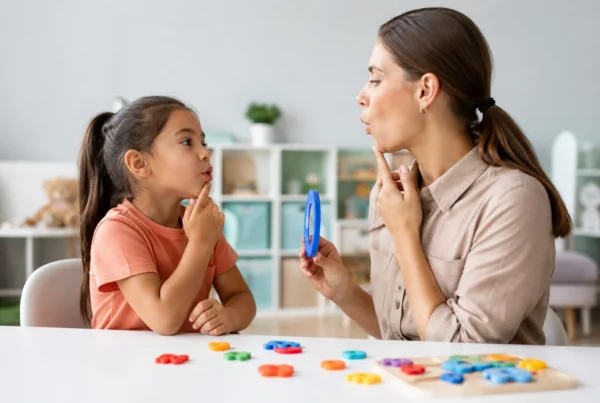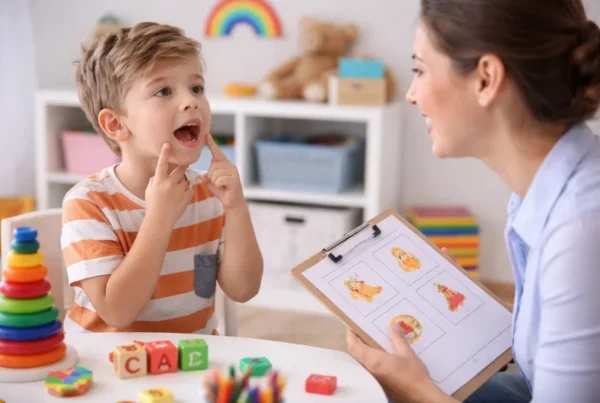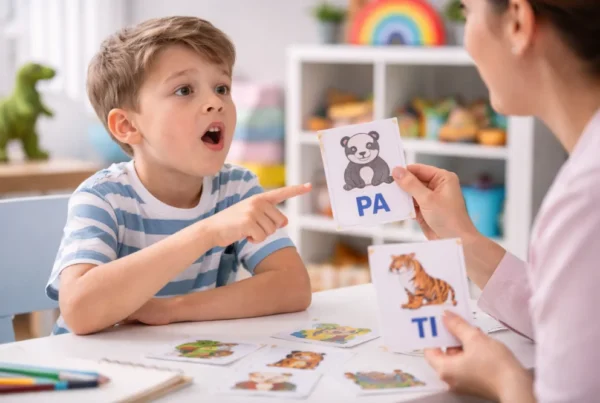


After an apraxia diagnosis, most parents in Mission Viejo quickly discover that specialized motor speech therapy looks and costs differently from standard speech services. Jill Dews, MA, CCC-SLP, founded Let’s Talk Speech and Language Therapy in 2002 to give South Orange County families access to skilled, specialized early intervention and clear answers about what treatment actually involves. She has worked with families across Palmia, Canyon Crest, and surrounding communities for more than two decades, and the apraxia conversation is one she takes seriously from the very first call.
The cost of apraxia therapy depends on session frequency, the severity of the motor planning difficulty, and how early intervention begins. Starting sooner almost always means better long-term outcomes, and Jill Dews and her team at Let’s Talk walk every Mission Viejo family through exactly what to expect before anyone commits to a single appointment. There are no surprises here, just honest information and a clear plan forward.
What Apraxia Therapy Costs Per Session in Mission Viejo
Private apraxia therapy sessions in Mission Viejo typically run between $150 and $250 per session depending on session length and the provider’s level of specialization. Initial evaluations are billed separately and range from $200 to $400 based on the depth of the motor speech assessment. Most practices offer 30-minute and 60-minute session options, though children with apraxia often benefit from more frequent shorter sessions rather than one longer weekly appointment.
Parents in Evergreen Ridge and Vista del Lago often ask why apraxia therapy tends to cost more over time than general speech therapy. The answer comes down to session frequency. Motor planning disorders require repetitive, highly structured practice to build new neural pathways, and that means more appointments per week rather than fewer. The overall investment reflects the intensity the condition requires, not an arbitrary pricing decision.
Why Apraxia Therapy Requires More Frequent Sessions
Childhood apraxia of speech is a motor planning disorder, not a language delay or a simple articulation problem. The child knows what they want to say, but the brain struggles to send the right signals to the mouth to produce the sounds in the correct sequence. Treating it means building motor memory through thousands of repetitions of carefully targeted movement patterns, and that process does not happen in one session per week.
Most apraxia specialists recommend two to four sessions per week in the early stages of treatment, particularly for children who are minimally verbal or who have significant intelligibility concerns. Jill Dews calibrates session frequency at Let’s Talk based on each child’s individual profile and the family’s capacity to support home practice between appointments. Children whose families actively practice targets at home between sessions consistently make faster progress than those who rely on in-office work alone.
The American Speech-Language-Hearing Association recognizes childhood apraxia of speech as a distinct motor speech disorder requiring specialized intervention approaches, which is why finding a therapist with specific apraxia training matters as much as the frequency of sessions.
Does Insurance Cover Apraxia Therapy for Kids?
Insurance coverage for apraxia can be more complicated than coverage for general speech and language delays. Some insurers classify apraxia differently from other speech disorders, and the documentation requirements are stricter. Knowing exactly what your plan needs before you schedule prevents delays and unexpected out-of-pocket costs.
Here is what to verify with your insurance provider before booking at Let’s Talk:
- Ask whether childhood apraxia of speech is covered under your plan’s speech therapy benefit
- Confirm whether a physician referral or formal CAS diagnosis code is required before sessions begin
- Ask whether your plan requires prior authorization and how many sessions per year it will approve
- Find out whether Let’s Talk Speech and Language Therapy is in-network under your current plan
- Ask whether the evaluation is billed separately from ongoing weekly or twice-weekly sessions
- Confirm your deductible status and whether out-of-pocket costs apply before coverage begins
Even partial coverage makes a real difference when therapy runs two to four times per week. The Let’s Talk team helps families in Mission Viejo sort through the insurance process from day one so they can stay focused on their child rather than navigating claim paperwork on their own.
How Apraxia Therapy Differs From Standard Speech Therapy
Standard speech therapy covers a wide range of concerns including language development, fluency, voice, and articulation. Apraxia therapy is a specific, intensive approach built entirely around motor learning principles. The techniques used, the session structure, and the pace of the work all look different from general speech therapy because the underlying problem is different.
Evidence-based approaches like Dynamic Temporal and Tactile Cueing (DTTC) and PROMPT are designed specifically for motor speech disorders. They use movement, touch, and carefully graded cueing hierarchies to help the brain build reliable motor plans for speech. A generalist who occasionally sees apraxia cases is working with different tools than a therapist who has invested in specialized training.
Parents in Mission Viejo who have already tried one provider and not seen the expected progress often find that the missing piece was the specificity of the approach rather than their child’s potential. Jill Dews brings focused apraxia expertise to every session at Let’s Talk, and families consistently describe that difference as the turning point.
What to Look for in an Apraxia Therapist in Mission Viejo
Not every speech-language pathologist has the same level of training or experience with childhood apraxia of speech. Knowing what to ask when evaluating a provider helps families in South Orange County make a confident decision rather than learning the difference through trial and error.
Here is what matters most when choosing an apraxia therapist for your child.
| Factor | What It Means | Why It Matters for Apraxia |
| PROMPT certification | Tactile-kinesthetic cueing approach for motor speech | Directly addresses motor planning at the movement level |
| DTTC training | Dynamic Temporal and Tactile Cueing methodology | Evidence-based approach designed specifically for CAS |
| Session frequency approach | Willingness to schedule 2 to 4 times per week | Apraxia requires repetition to build motor memory |
| Family coaching involvement | Parent education built into every session | Home practice between sessions drives faster progress |
| Progress measurement | Regular, documented milestone tracking | Ensures the plan adjusts as the child develops |
| Experience with nonverbal children | Prior work with minimally verbal or nonverbal kids | Critical when a child has limited functional speech |
Jill Dews brings specialized apraxia training and more than 20 years of hands-on experience to every child she works with at Let’s Talk. Families across Mission Viejo and South Orange County consistently describe her approach as specific, structured, and notably different from what they experienced with generalist providers. The right therapist does not just know what apraxia is. They know exactly how to treat it.
What Families in Mission Viejo Experience During Apraxia Therapy
Apraxia therapy is a long-game investment, and the families who commit to it consistently describe a progression that feels slow at first and then suddenly accelerates. The early weeks focus on building a foundation of reliable sounds. Progress starts to compound from there as the motor plans become more automatic and the child gains confidence in using their voice.
Here is what parents in Mission Viejo consistently report across the course of apraxia therapy at Let’s Talk:
- Their child begins producing sounds or syllables they previously could not access at all
- Intelligibility improves gradually and then noticeably, often starting with close family members first
- Frustration at home decreases as the child develops more reliable ways to communicate what they need
- Teachers and peers begin responding differently as the child’s speech becomes more consistent
- Parents feel equipped to run home practice sessions using the exact techniques Jill teaches in sessions
- The child begins initiating more communication attempts on their own rather than waiting to be prompted
The Let’s Talk Early Intervention App, available on the Apple App Store, extends Jill Dews’ motor speech approach directly into the home environment between sessions. Families across Mission Viejo and Casta del Sol use it to keep practice consistent on days when there is no scheduled appointment. Consistent daily repetition is what turns a cued sound into a spontaneous one, and the app makes that possible without requiring clinical expertise from the parent.
You Have Found the Right Place. Here Is the Next Step.
You have navigated a difficult diagnosis, done the research, and pushed through the uncertainty to find a therapist who actually specializes in what your child needs. That persistence matters, and it puts your child in a significantly better position than if you had waited. Jill Dews, MA, CCC-SLP, is a California licensed Speech-Language Pathologist, a member of both ASHA and Apraxia Kids, and the founder of Let’s Talk Speech and Language Therapy, where she has spent more than 20 years helping children in Palmia, Casta del Sol, and across South Orange County find their voice through focused, evidence-based motor speech intervention.
Schedule an evaluation at Let’s Talk Speech and Language Therapy and walk away with a clear picture of your child’s motor speech profile, a realistic treatment plan, and a straightforward answer to what the investment will look like. Jill Dews and her team will answer every question before you commit to anything. Reach out today at letstalkspeechandlanguagetherapy.com.
Let’s Talk Speech and Language Therapy
27285 Las Ramblas, Suite #210
Mission Viejo, California 92691
(949) 218-0508
Driving Directions
Jill Dews, M.A., CCC-SLP
CA License #: SP12461
Link to Verify License
Frequently Asked Questions
How much does apraxia therapy cost in Mission Viejo, CA?
Private apraxia therapy sessions in Mission Viejo typically range from $150 to $250 per session depending on session length and the provider’s specialization. Initial motor speech evaluations generally run between $200 and $400 based on the scope of the assessment. Apraxia Kids, the leading national organization for childhood apraxia of speech, recommends working with a therapist who has specific CAS training rather than a generalist, and that level of specialization is reflected in the investment. Many insurance plans cover apraxia therapy when a physician documents medical necessity with the appropriate diagnosis code, so verifying coverage before scheduling can reduce out-of-pocket costs significantly.
Will insurance cover my child’s apraxia therapy sessions?
Most major insurance plans cover childhood apraxia of speech therapy when it is deemed medically necessary and documented with the correct CAS diagnosis code. Coverage requirements vary, and many plans require a physician referral, prior authorization, and session frequency justification before approving twice-weekly or more intensive schedules. The American Speech-Language-Hearing Association advises families to verify whether their plan covers private outpatient therapy specifically, since some plans limit coverage to school-based services. Checking your annual session cap and deductible status before the first appointment prevents unexpected gaps in coverage mid-treatment.
How long does apraxia therapy take to show results?
Progress in apraxia therapy depends on severity, the child’s age when therapy begins, session frequency, and the consistency of home practice. Children with mild to moderate apraxia who receive two sessions per week and daily home practice often show measurable gains within three to six months. Apraxia Kids notes that children with severe apraxia may require intensive intervention over one to three years before reaching functional intelligibility goals. The American Academy of Pediatrics recommends beginning intervention as early as a concern is identified, since earlier starts consistently produce better long-term outcomes.
What is the difference between apraxia therapy and regular speech therapy?
Regular speech therapy covers a broad range of concerns including language delays, fluency, voice, and articulation. Apraxia therapy is a specific, intensive form of motor speech treatment focused entirely on helping the brain build reliable movement plans for producing speech sounds in sequence. ASHA recognizes childhood apraxia of speech as a distinct motor speech disorder that requires specialized approaches like DTTC and PROMPT. Standard articulation and language therapy do not use these techniques. A therapist with specific apraxia training uses a fundamentally different session structure, cueing hierarchy, and progress framework than a generalist working with a broader caseload.
Related Services