


When your child is working on speech therapy, home practice can feel like a mystery. What do you actually do? How much time should it take? And how can you tell if it’s helping? This article breaks down everything families in Mission Viejo need to know about practicing phonological processing therapy at home, including simple routines, expert-backed advice, and ways to make it easier.
Jill Dews, M.A., CCC-SLP, brings over 20 years of clinical experience to families across neighborhoods like Painted Trails, Pacific Hills, and Rainbow Ridge. As the founder of Let’s Talk Speech and Language Therapy, Jill has dedicated her career to early intervention and family-focused speech support. Her guidance, including tools like the Let’s Talk Early Intervention App, makes it easier for parents to play a hands-on role in their child’s progress.
What Is Phonological Processing Therapy?
Phonological processing therapy focuses on helping kids who mix up sound patterns in words. It’s different from just struggling to say a tricky sound like “r” or “s.” Kids with phonological issues might replace whole sounds or drop them entirely. For example, they may say “dop” instead of “stop” or “tat” instead of “cat.”
This type of therapy teaches kids how to recognize and use the correct sound patterns. It helps them understand the building blocks of language and how sounds fit together to make words. These skills are critical for both speaking clearly and developing literacy skills like reading and spelling.
The best way to make sure this learning sticks is through repetition and reinforcement. That’s where daily home practice becomes a game-changer.
Why Home Practice Makes a Big Difference
Therapy is powerful, but it usually happens once or twice a week. That leaves a lot of time in between where kids either keep using the new patterns or slip back into old habits. Short, simple daily practice fills in that gap and gives your child the boost they need to keep progressing.
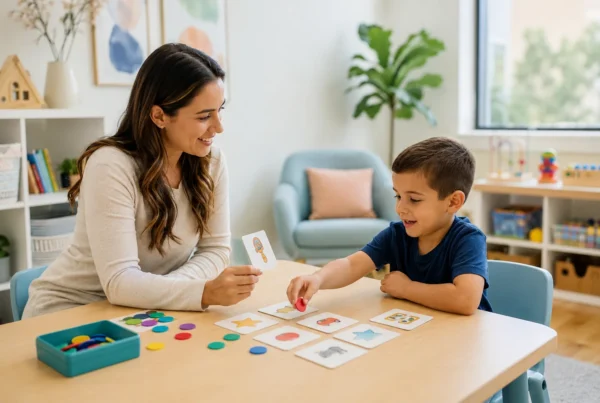
Practicing at home doesn’t have to be complicated. Even five to ten minutes a day can make a noticeable difference in your child’s ability to use new speech patterns. What’s more, when practice happens during everyday routines, it feels less like work and more like part of normal life.
To make the most of home practice, consistency is key. Use the same words or sounds your child worked on in therapy that week, and focus on keeping it playful and relaxed. Avoid turning it into a chore by using silly voices, favorite toys, or quick rewards for effort.
Easy Practice Ideas That Fit Busy Schedules
Busy days don’t mean you can’t practice. Many families in Mission Viejo have found ways to make speech practice feel like a normal part of their routine. Here are some child-friendly activities that work well when time is tight:
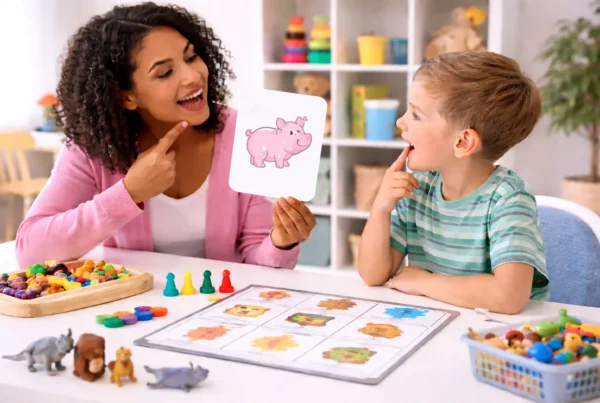
- Use a board game and have your child say a target word before each turn
- Play a “sound scavenger hunt” to find items around the house that start with the practice sound
- Choose a bedtime story and change a repeated word to a sound target
- Let your child practice in front of a mirror to see how their mouth moves
- Make a chart to track how many words they get right and reward with stickers
By adding these little activities to daily life, you keep the pressure low and the engagement high. Practice doesn’t have to be perfect to be effective.

Understanding Articulation vs. Phonological Issues
This part can get confusing for parents, and that’s completely understandable. Articulation issues usually focus on one specific sound. Maybe your child has a hard time saying “r” or “s.” On the other hand, phonological processing disorders involve entire patterns of sound errors across multiple words.
Your child might consistently drop the final sounds in words or substitute one sound for another in predictable ways. This can affect how easily others understand them. It can also lead to challenges in reading, spelling, and general classroom participation if left unaddressed.
Here’s a side-by-side look to help clarify:
| Feature | Articulation | Phonological Processing |
| Focus | One sound | Sound patterns |
| Example | Trouble with “r” in “rabbit” | Says “dop” instead of “stop” |
| Therapy | Repeating correct sound | Teaching sound contrasts |
| Home practice | Say one sound clearly | Practice word pairs or patterns |
Your therapist will explain which type of issue your child is working on. Many kids work on both areas at different times during their therapy journey.
Early Support Creates Lifelong Benefits
It’s normal to wonder if your child might grow out of speech issues, and some do. But with phonological processing problems, research shows that early support creates better long-term outcomes. These include stronger reading skills, clearer speech, and greater confidence in school and social settings.
When children don’t receive support early, they may struggle to keep up academically. Delays in speech clarity can also impact their willingness to participate in group discussions or answer questions in class. That’s why acting early is so important.
Jill Dews founded Let’s Talk Speech and Language Therapy in 2002 with a deep understanding of this need. Her background includes working in special education classrooms and collaborating closely with families in the Capistrano Unified School District. Today, her clinic supports early intervention across Mission Viejo and offers tools like the Let’s Talk Early Intervention App to make help even more accessible.
Motivation Tips for Families and Kids
Even when you know what to do, it doesn’t mean it’s always easy to do it. There will be days when your child isn’t in the mood to practice. And there will be evenings when you’re just too tired to try. That’s okay. The goal isn’t perfection, it’s progress.
Here are some tips to keep motivation going without pressure:
- Set a short timer and stop when it rings, even if things are going well
- Let your child help choose which game or activity to do that day
- Use simple rewards like choosing dinner or extra story time
- Praise effort, not just accuracy
- Give yourself permission to skip a day and try again tomorrow
Parents in Pacific Hills, Quail Run, and Canyon Crest often tell us these small shifts make a big difference. Practice becomes something their child enjoys instead of avoids.
When to Ask for Professional Support
If you’re not sure what to practice, how often to do it, or whether it’s working, don’t guess. That’s where a licensed speech-language pathologist comes in. They have the experience and training to create a plan that matches your child’s specific needs and learning style.
Let’s Talk Speech and Language Therapy gives families in Mission Viejo clear, personalized guidance. Jill Dews, M.A., CCC-SLP, combines warmth, evidence-based strategies, and two decades of clinical insight to help parents feel more confident supporting their child at home.
You can reach out to schedule a consultation, ask for updated practice ideas, or get feedback on your child’s progress. Whether you’re just beginning therapy or looking to make the most of it, we’re here to help.
Call (949) 218-0508 or visit Let’s Talk Speech and Language Therapy to get started. With the right support and a little structure at home, you’ll be amazed at what your child can accomplish.
Frequently Asked Questions
How often should we practice speech sounds at home?
Parents worry about doing “too little” or burning kids out. The real question is how to make practice effective and sustainable.
What they should ask instead: How much daily practice is enough to make progress without overwhelming my child?
- Immediate Insight: Short, consistent practice, about 5–10 minutes a day, is usually more effective than one long session once or twice a week.
- Supporting Context: Frequent, low-pressure repetitions help the brain and mouth build new sound patterns, especially for phonological work where kids are learning new “rules” for how sounds go together.
- Deeper Implication: When practice is brief, predictable, and built into daily routines (car rides, bath time, snack time), families are more likely to stick with it, and kids carry over new patterns faster into real conversation.
Is my child working on articulation or phonological processing?
Parents hear both terms and aren’t sure what they mean, or what they imply for home practice and prognosis.
What they should ask instead: Is my child working on single sounds, sound patterns, or both, and what does that mean for how we practice?
- Immediate Insight: If your child mainly struggles with one or a few specific sounds (like /r/ or /s/), it’s often an articulation focus; if they use patterns that affect many sounds (like dropping final sounds or replacing all “back” sounds with “front” ones), it’s typically phonological.
- Supporting Context: Articulation work is motor-based, practicing how to move the tongue, lips, and jaw for a sound, while phonological therapy targets the rules of the sound system (for example, learning to keep final sounds, or to use two sounds instead of one in clusters).
- Deeper Implication: Knowing which type (or mix) your child has helps you understand why the SLP chooses certain games or word lists, and why one well-designed activity at home can improve many sounds at once in phonological therapy.
Do we still need home practice if my child gets weekly therapy?
Families are busy, and it’s easy to assume that once-a-week sessions are enough, especially if they’re intensive.
What they should ask instead: How does home practice change my child’s progress between weekly therapy sessions?
- Immediate Insight: Yes, home practice is essential. Weekly therapy introduces and strengthens skills, but daily use at home is what turns new sound patterns into habits in real-life talking.
- Supporting Context: Research on speech sound disorders shows that higher “dose frequency” (more frequent correct productions across the week) leads to faster gains, home practice multiplies the number of successful trials beyond what’s possible in one session.
- Deeper Implication: Thinking of yourself as part of the therapy team, not just a spectator, can significantly shorten the time your child needs formal treatment and boost carryover into classrooms, playdates, and family conversations.
What should I practice at home?
Parents want to help but often feel unsure which words, sounds, or games actually move the needle.
What they should ask instead: What specific targets and routines will give my child the biggest payoff between sessions?
- Immediate Insight: The best home practice focuses on your child’s current therapy targets: specific sounds, word positions (beginning/middle/end), or phonological patterns (like final consonants, clusters, or front/back sounds). Your SLP should give you a word list or picture set, not just a general “practice more.”
- Supporting Context: In phonological processing therapy, activities often use minimal pairs (e.g., “bow–boat,” “tea–tree”) to highlight the difference your child is learning; simple games like memory, bingo, or “I spy” built around those pairs make repetitions feel natural.
- Deeper Implication: When home practice mirrors the SLP’s approach, same targets, same contrasts, same cues, your child gets a powerful, consistent message about the new pattern, leading to faster, more widespread changes in how they speak.