


If your child has trouble saying certain sounds, you might be wondering what speech therapy actually involves. Like, what does the speech therapist really do? How do they choose what to work on? And how can you tell if things are getting better? This article walks you through how speech-language pathologists (SLPs) handle phonological processing therapy and how they team up with you to help your child.
Jill Dews, M.A., CCC-SLP, started Let’s Talk Speech and Language Therapy back in 2002 to support families right here in Mission Viejo. She has over 20 years of experience helping kids speak more clearly and confidently. Whether you’re in Cypress Point or Arroyo Vista, Jill and her team are here to make speech therapy feel a lot less overwhelming and a lot more doable.
What Does a Speech Therapist Actually Do?
SLPs do way more than just practice sounds with kids. In phonological therapy, they look for patterns in how a child talks. Maybe your child always says “tat” for “cat,” or drops the last sound off every word. The therapist figures out what those patterns mean and makes a game plan to help.
That plan is totally customized. No cookie-cutter stuff here. Your SLP will adjust based on how your child learns, what motivates them, and how they respond in sessions. And do not worry, you are part of the plan too. The therapist will show you how to help at home without feeling like you are doing it wrong.
How Do SLPs Spot Speech Patterns?
It starts with a deep dive. Your child’s evaluation is not just a quick screening. The therapist listens closely to how your child uses sounds in real conversation, not just in isolated words. They’re on the lookout for sound patterns that make speech hard to understand.
Some of the most common ones they check for include things like:
- Saying “tat” instead of “cat” (fronting)
- Leaving off the last sound in a word (final consonant deletion)
- Swapping “sun” for “tun” (stopping)
- Saying “pane” for “plane” (cluster reduction)
- Replacing “r” with “w,” like “wabbit” for “rabbit” (gliding)
Once the SLP knows what is going on, they group those patterns into a treatment plan. That way, therapy focuses on fixing the things that make speech unclear, not just random sound errors.
What Do Sessions Look Like?
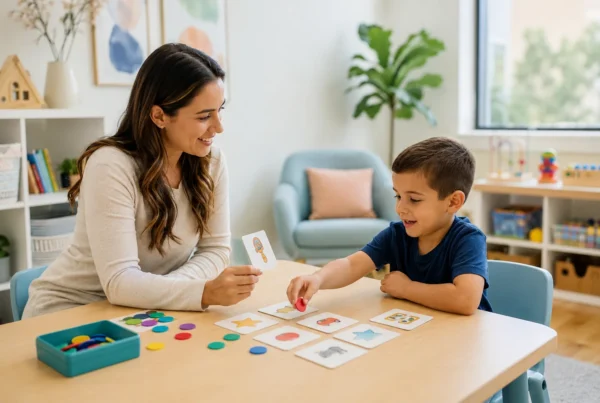
Therapy is not just drills and worksheets. A good SLP makes it fun while still being strategic. They mix sound work into games, stories, and hands-on play so your child stays engaged without even realizing how much they are learning.
Most sessions include listening activities to help your child hear the difference between correct and incorrect sounds. Then they practice minimal pairs, like “tea” and “key,” to highlight what needs changing. There is usually a ton of repetition, but it never feels boring because they build it into fun stuff.
By the end of the session, your child is using those sounds in short phrases or pretend play. The goal is to gradually move from guided practice to real-life talking. And yes, every kid gets there at their own pace.

How Do They Know It’s Working?
Therapists do not just guess if things are improving. They track everything. And that is actually a good thing because it shows you what is working and where your child is making progress.
Here are a few ways SLPs track improvement:
- They count how often your child uses the correct sound during activities
- They listen for moments when your child uses those sounds naturally
- They do check-ins and mini-assessments every few months
- They ask for your feedback about how things are going at home and school
- They tweak goals once old habits fade and new ones pop up
The therapist uses this info to make smart changes to the plan. And it gives you peace of mind that things are actually moving forward.
How Do SLPs Team Up with Parents and Teachers?
You know your child better than anyone, and SLPs truly value that. Therapists often reach out to keep you updated on what your child is working on in sessions and how you can help. Many also connect with teachers to make sure what’s happening in therapy shows up in the classroom.
That teamwork can take many forms. It might look like sending home weekly notes or quick emails so you know which sounds to practice. Your SLP may also share home practice sheets that align with therapy goals or offer tips on how to model good speech casually during daily routines. If your child is pushing back against practice, the therapist can help troubleshoot and find new strategies. And along the way, they make sure to cheer on every little win, no matter how small.
The focus is not on being perfect. It is about moving forward. When parents, teachers, and therapists are all supporting the same goals, children make more progress and feel more confident in their everyday communication.
Articulation vs. Phonological Therapy: What’s the Difference?
Sometimes it is hard to tell if your child needs help with one sound or if there is a bigger pattern going on. That is why your SLP will explain the difference between articulation therapy and phonological therapy. They sound similar, but they are not the same.
Here is how they compare:
| Therapy Type | Focus | Goal | Common Tools |
| Articulation | Fixing a specific sound | Teach correct mouth placement | Mirror work, sound drills |
| Phonological | Fixing patterns of errors | Rewire how the brain processes sound rules | Minimal pairs, contrast games |
Your child might need one, the other, or a bit of both. Either way, your SLP will guide you through it so you know what to expect.
Why the Right Therapist Really Matters
Therapy is not just about worksheets and sound cards. It is about connection. A great therapist knows how to connect with your child and adjust the plan when things get tough or when progress suddenly clicks. That kind of flexibility makes all the difference.
Jill Dews, M.A., CCC-SLP, has been doing this for more than two decades. She has helped kids all over Mission Viejo, from Eastbrook to Evergreen Ridge, feel more confident and understood. Her practice, Let’s Talk Speech and Language Therapy, is built around supporting families like yours in a way that feels warm, personal, and genuinely helpful.
If you want to learn more or just have questions, give the team a call at (949) 218-0508 or visit Let’s Talk Speech and Language Therapy. Jill and her team are here to help your child feel heard, understood, and ready to grow.
Frequently Asked Questions
How do SLPs decide what my child needs to work on?
Parents want to trust that therapy targets are not random drills, but based on a full picture of how their child communicates.
What they should ask instead: How does my child’s SLP use testing, observation, and family input to choose the most important goals?
- Immediate Insight: SLPs start with a comprehensive evaluation, listening to how your child talks, checking sound patterns, and rating how easily others can understand them, often using standardized tests and conversation samples.
- Supporting Context: They also review medical and developmental history and talk with you about your concerns, then analyze which speech sound patterns are typical for age and which are delayed or disordered.
- Deeper Implication: Your child’s therapy plan is built from this full profile, not just “one sound at a time”, so goals target what will most quickly improve clarity, confidence, and everyday communication.
How long does phonological therapy take?
Families want a realistic sense of the journey so they can plan time, energy, and expectations.
What they should ask instead: What factors influence how long my child will need phonological therapy?
- Immediate Insight: Length of therapy varies, kids with one or two phonological patterns may show changes within months, while children with many patterns or co‑occurring language needs often benefit from longer support.
- Supporting Context: Progress depends on age, attention, how many patterns are present, practice frequency at home, and how consistently your child attends therapy; research shows higher “dose” (more correct productions per week) speeds progress.
- Deeper Implication: Instead of focusing on a fixed end date, look for steady improvements in clarity and reduced error patterns; your SLP will adjust goals and keep you updated so therapy stays targeted and efficient.
Can I help with therapy at home?
Parents don’t want to “mess it up,” but home practice is one of the biggest drivers of progress.
What they should ask instead: What kind of simple, realistic home practice makes the biggest difference for phonological therapy?
- Immediate Insight: Yes, and it’s strongly recommended. Even 5 minutes a day of focused, SLP‑guided practice can significantly boost progress and carryover into real-life talking.
- Supporting Context: SLPs typically provide specific word lists, minimal pairs, or sound patterns to practice in brief, game‑like activities (e.g., card games, “I spy,” turn‑taking during routines), so it doesn’t feel like homework.
- Deeper Implication: When home practice uses the same targets and cues as therapy, your child gets a consistent message about the new pattern, helping changes show up faster in classrooms, playdates, and everyday conversations.
What if I am not sure whether my child needs articulation or phonological therapy?
Label confusion can make parents anxious about whether their child is getting the “right” treatment.
What they should ask instead: What does my child’s error pattern tell us about whether we should focus on articulation, phonology, or both?
- Immediate Insight: That’s exactly what the SLP is trained to determine. They look at whether your child has a few motor‑based sound errors (articulation) or broader patterns that affect entire groups of sounds (phonology).
- Supporting Context: Evaluation includes analyzing error patterns across many words and positions; your SLP will explain whether your child is mainly learning how to move for specific sounds, how to change sound “rules,” or a combination.
- Deeper Implication: Understanding the diagnosis helps you make sense of the therapy plan, why the SLP may use minimal pairs, cycles, or traditional drills, and reassures you that the approach is matched to how your child’s speech system works.
How do SLPs guide our family through the therapy process?
Parents want to feel like partners in the process, not just observers in the waiting room.
What they should ask instead: How will our SLP keep us informed, adjust the plan, and support us between sessions?
- Immediate Insight: SLPs typically explain evaluation results in clear language, outline goals, and show you how progress will be measured (for example, fewer error patterns or easier‑to‑understand speech in conversation).
- Supporting Context: As therapy progresses, they track data, share updates, and adjust targets; many invite parents into part of the session or provide quick debriefs and handouts so you know exactly what to practice at home.
- Deeper Implication: When you understand the “why” behind activities and feel comfortable asking questions, therapy becomes a collaborative journey, your child benefits from a consistent, supportive team at home and in the clinic.